BioPharma Manufacturing Resilience: Lessons From Capacity Expansion and Supply Chain Resets from 2025
24 December 2025 | Wednesday | Analysis
The year 2025 has marked a pivotal moment for the biopharmaceutical industry as it reckons with the aftershocks of a global pandemic and ongoing geopolitical and economic pressures. In response to unprecedented disruptions, biopharma companies worldwide have invested heavily in expanding manufacturing capacity and restructuring supply chains to build greater resilience. This comprehensive analysis examines global trends in these efforts, with particular attention to key markets in North America, Europe, and the Asia-Pacific (APAC). It explores how organizations – from large pharmaceutical firms to agile biotech players – expanded production capabilities to meet surging demand, and how supply networks were reset to address vulnerabilities exposed in recent years. Lessons from case studies across vaccines, monoclonal antibodies, and cell & gene therapies illustrate both the achievements and challenges of this period. Finally, we highlight strategic approaches that emerged, such as nearshoring manufacturing, adoption of digital twin technologies, increased automation, and the use of advanced analytics, all of which have become integral to the industry’s playbook for resilience. The findings are presented in a structured format suitable for an executive audience, with data-supported insights and summary tables to underscore key developments.
Global Landscape by 2025: Regional Trends in Capacity and Resilience
North America (NA): In the United States and Canada, 2025 saw a strong push for localized biopharma manufacturing and innovation in production technologies. Major firms opened state-of-the-art facilities, often with government incentives aimed at strengthening domestic supply security. For example, in early 2025 Merck launched a $1 billion vaccine manufacturing plant in North Carolina, incorporating cutting-edge technologies like artificial intelligence (AI) and even 3D printing to enable faster, more flexible vaccine production. U.S. policymakers, influenced by pandemic-era shortages, encouraged “reshoring” critical drug production. However, as experts noted, reshoring is no quick fix – building new facilities can take 3–5 years – so companies also invested in digital supply chain models to optimise existing networks. The use of digital twins and analytics gained traction, allowing firms to simulate manufacturing and supply chain scenarios. As one industry advisor explained, companies now model entire supply chains virtually to evaluate the impact of moving production to different locations, accounting for costs, tariffs, taxes, and workforce availability. This data-driven approach has helped North American manufacturers decide which products to produce locally versus rely on global sites, striking a balance between cost and security.
Meanwhile, Canada and the U.S. saw notable public-private initiatives. In Canada, for instance, Moderna and other vaccine producers moved to establish mRNA vaccine facilities to ensure regional supply for future health emergencies (partly funded by government programs for pandemic preparedness). In the U.S., federal actions in 2024–2025 (such as use of the Defense Production Act and strategic grants) targeted generic drug supply – an area plagued by shortages due to offshoring. By late 2023, drug shortages in the U.S. had hit a decade high, with over 300 products in shortage, illustrating the fragility of supply for low-cost generics. In response, the U.S. bolstered efforts to onshore production of essential medicines and active pharmaceutical ingredients (APIs), although progress is gradual. Overall, North America’s trend has been one of capacity expansion coupled with policy-driven resilience measures, including diversified sourcing and strategic stockpiling for critical supplies. The result is a region more prepared to withstand disruptions, albeit still interlinked with global supply chains.
Europe: European nations in 2025 emphasised “strategic autonomy” in medicines, learning from early pandemic scarcities (e.g. limited vaccine production capacity and reliance on Asian API imports). The European Union set up mechanisms like the HERA (Health Emergency Preparedness and Response Authority) and deployed financing to strengthen local manufacturing. For example, the EU and European Investment Bank partnered with industry to fund facilities both within Europe and abroad in friendly nations. A headline project was BioNTech’s new mRNA vaccine plant in Kigali, Rwanda, supported by nearly €95 million in blended EU financing. This venture not only expands capacity but also diversifies geography, aligning with the African Union’s goal to produce 60% of the continent’s vaccines locally by 2040. In Europe itself, pharma companies undertook significant expansions. AstraZeneca, for instance, doubled capacity at its Södertälje (Sweden) biologics campus with a $135 million extension including new fill-finish lines for injectable drugs. Notably, that investment was Europe’s largest for the site since 2021 and is intended to ensure a robust supply of biologics (the site produces ~40% of AZ’s global sales). European governments have shown willingness to co-invest: AstraZeneca also planned a major vaccine manufacturing facility in the UK (Liverpool), citing pandemic preparedness, though negotiations over state aid illustrate that public support is a key factor in keeping such projects local. Moreover, Europe’s focus extended to securing API and raw material production. Initiatives were launched to produce more APIs on European soil (e.g. through consortia in France and Germany) to reduce dependency on single-country suppliers. The energy crisis of 2022 – driven by war-related gas supply disruptions – had underscored the need for control over critical inputs, as high energy prices and feedstock costs impacted chemical and API production. By 2025, European manufacturers had adapted by improving energy efficiency and building more redundancy in supplier bases. The region also led in sustainability-linked resilience, with many facilities adopting greener processes and on-site renewable energy, ensuring that resilience strategies aligned with environmental goals. In summary, Europe’s trend is geographically diversified capacity (including partnerships abroad for global health) and reinforcing regional supply chains, supported by both industry investment and government policy.
Asia-Pacific (APAC): The APAC region emerged as a biopharma manufacturing powerhouse by 2025, with rapid growth in capacity across key countries. In fact, nearly 40% of recent global biopharma expansion projects have been in Asia-Pacific, notably in countries like India and Singapore This reflects both cost advantages and strategic initiatives by those governments. India ramped up its role as a vaccine and biologics supplier: a prime example is Bharat Biotech’s massive new vaccine facility in Odisha, capable of producing eight billion doses per year. Commissioned in 2025 with a ₹1,500 crore investment, it is touted as one of the world’s largest vaccine plants, initially manufacturing cholera, malaria, and polio vaccines. This expansion not only helps meet regional needs (addressing shortages like the global cholera vaccine gap) but also cements India’s self-reliance and contribution to global vaccine equity. China continued to expand its biologics manufacturing base as well, with biotech giants and contract manufacturers (e.g. WuXi Biologics) adding capacity. WuXi and others have been building new sites not just in China but in other countries (such as Singapore) to serve global clients – a sign of APAC’s growing export of biopharma services. South Korea likewise solidified its position: Samsung Biologics now operates one of the world’s largest biologics manufacturing complexes. With the launch of its Plant 5 in April 2025, Samsung’s total bioreactor capacity reached ~784,000 litres, the industry’s largest. The company is already planning a sixth plant to meet ongoing global demand. Interestingly, Samsung Biologics also expanded internationally by securing its first U.S.-based site in 2025, a 60,000L facility in Maryland, as a way to diversify its supply network and be nearer to clients. This move encapsulates a wider APAC trend: leading manufacturers from Asia are “nearshoring” into Western markets, even as Western firms are setting up in Asia – a reciprocal integration that spreads risk. Singapore attracted major investments too, leveraging its reputation for quality infrastructure. Several multinationals (from Sanofi to BioNTech) either opened or announced vaccine and biologics facilities in Singapore, making it a regional biotech hub. In APAC developing nations, collaborations aimed to boost local production of essential medicines – for example, partnerships to produce mRNA vaccines in Thailand and Vietnam have been discussed, echoing the goal of distributed manufacturing capacity. Overall, APAC’s key trend is aggressive capacity growth to serve both local populations and global markets, combined with rising technical sophistication (e.g. facilities equipped with advanced automation and quality systems to meet stringent international standards). These developments in Asia-Pacific have significantly altered the global supply map: in 2025, not only is APAC a critical supplier region, but it is also investing in resilience through geographic diversity within the region itself (for instance, India’s eastward expansion to Odisha, and China’s global footprint) to guard against localised disruptions.
Expanding Manufacturing Capacity to Meet Global Demand
By 2025, biopharma companies around the world undertook major capacity expansions in response to surges in demand for key therapies and to prepare for future crises. The table below highlights several of the major manufacturing expansion projects and investments from recent years, illustrating the scale and scope of this global build-out:
|
Company (Region) |
Expansion (Type) |
Details & Impact |
|
Bharat Biotech (India) |
New Vaccine Campus |
₹1,500 Cr “mega facility” in Odisha with capacity for 8 billion doses/year; produces cholera, malaria, polio vaccines. Boosts India’s self-reliance and global vaccine supply (especially for LMICs). |
|
Merck & Co. (USA) |
Vaccine Plant (Greenfield) |
$1 billion invested in a state-of-the-art vaccine plant in North Carolina (opened 2025), featuring AI and continuous processing. Expands domestic production of vaccines and pandemic readiness in North America. |
|
Samsung Biologics (S. Korea) |
Biologics Factories (Expansion) |
Opened Plant 5 in Songdo BioCampus, adding 180,000L capacity (total ~784,000L globally). Now the world’s largest biologics manufacturer, Samsung also acquired a 60,000L US site to ensure global coverage. |
|
AstraZeneca (Sweden) |
Biologics Fill-Finish Extension |
$135 million expansion doubling capacity at Södertälje site, adding new prefilled syringe filling lines. Supports biologic drug supply (40% of AZ’s sales) and injectables for emerging therapies (e.g. new GLP-1 drugs). |
|
CordenPharma (Switz./USA) |
Peptide API Facilities |
>€500 M for new large-scale peptide production in Switzerland (5,000L reactors); parallel expansion in Colorado, doubling output. Geared to meet exploding demand for GLP-1 peptide drugs (diabetes/obesity) with multi-continent supply. |
|
Lonza (Global) |
mRNA & Cell/Gene Capacity |
Multisite expansions (2023–25) increasing mRNA vaccine production lines and viral vector manufacturing globally. Part of Lonza’s strategy to support clients’ mRNA pipelines post-COVID and anticipated cell & gene therapy launches. |
|
Almac (N. Ireland) |
OSD Production Expansion |
£65 M invested in a new 100k sq. ft. facility for oral solids (including high-potency drugs). Increases capacity for small-molecule and oncology drug manufacturing in Europe, reflecting continued need for resilient supply of pharmaceuticals beyond biologics. |
|
AGC Biologics (Denmark) |
Biologics Capacity Boost |
New 2,000L single-use bioreactor suite (GMP online in 2024) doubled AGC’s mammalian production capacity. Enhances a CDMO’s ability to supply monoclonal antibodies and complex proteins at scale, with flexible single-use systems. |
Table 1: Selected major biopharma manufacturing expansions around the world (2024–2025). Investments span vaccines, biologics (mAbs and others), peptides, and small molecules, highlighting an industry-wide scale-up.
These examples demonstrate how both pharma companies and contract manufacturers responded to recent demand spikes. A few key observations emerge:
- Vaccine Manufacturing Boom: The COVID-19 pandemic triggered an unprecedented global vaccine manufacturing boom starting 2020–2021, and by 2025 its legacy is a significantly expanded vaccine infrastructure. Manufacturers built capacity not only for COVID vaccines but also for other infectious diseases, aiming to avoid the supply scramble witnessed in 2020. In addition to Merck’s U.S. plant and Bharat’s India hub, firms like Pfizer, Moderna, and Sanofi invested in new or retrofitted vaccine lines across North America, Europe, and Asia. Importantly, these investments embraced platform technologies – e.g. mRNA production suites that can be quickly reprogrammed for different vaccines. This platform approach is a lesson from COVID: flexibility is as vital as sheer capacity. The industry collectively produced about 7 billion vaccine doses in 2024, and projected 8 billion in 2025, an all-time high output that reflects both expanded capacity and ongoing demand (including routine immunisations, boosters, and new vaccine introductions). The resilience lesson from vaccines is twofold: build surge capacity ahead of crises, and regionalise production to ensure every continent has access. Initiatives like BioNTech’s “BioNTainer” modular mRNA units in Africa exemplify how modular capacity can be deployed to underserved regions, making supply chains less centralized and therefore less fragile.
- Monoclonal Antibodies and Biologics: The past few years have seen sustained high demand for monoclonal antibodies (mAbs) – from life-saving oncology and immunology drugs to antibody therapies for infectious diseases. Biologics manufacturing is complex and capital-intensive, so expansions tend to be large and long-term. Companies like AstraZeneca and Roche (Genentech) expanded fill-finish and formulation capacity to dispense injectables like mAbs more efficiently. A notable trend is the widespread adoption of single-use bioreactors and modular units. Single-use technology allows manufacturers to switch products or scale volumes faster, which was crucial when COVID monoclonal antibody treatments had to be produced quickly and later when production needed to pivot or scale down without wasting infrastructure. Contract manufacturers (CDMOs) also massively increased biologics capacity – AGC Biologics, as noted, doubled capacity with 2,000L disposable bioreactors, and Fujifilm Diosynth spent over $8 billion acquiring and upgrading sites in the U.S. and Europe to create “gigasites” able to produce a range of biologics at scale. These expansions mean that as of 2025, the global biologics supply is more robust, with greater redundancy. However, there have been cautionary lessons: one high-profile startup, Resilience, launched in 2020 to provide manufacturing capacity for others, found by 2025 that it had built more capacity than the market needed. Its CEO admitted their “capacity expansion has outpaced industry demand” and subsequently shuttered six underutilised sites in the U.S. to refocus on core hubs. This underscores a crucial strategic lesson: right-sizing capacity is difficult in a volatile market. Overbuilding can lead to idle plants if drug pipelines or demand don’t materialise as fast as expected – as happened when the anticipated wave of cell/gene therapies was delayed (hitting smaller biotech companies and their manufacturing partners). Thus, while increasing manufacturing muscle is essential, it must be coupled with adaptability (e.g. designing facilities that can be repurposed or scaled down if needed).
- Cell and Gene Therapy Manufacturing: Cell and gene therapies (CGTs) represent a revolutionary class of treatments (such as CAR-T cell therapies, gene therapies for rare diseases, etc.), but scaling up their manufacturing has been one of the industry’s toughest challenges. Early in the 2020s, production of viral vectors (the delivery vehicles for gene therapies) and the processing of patient cells were major bottlenecks. The FDA had even forecast that by 2025 it might approve 10–20 cell/gene therapies per year, highlighting the need for a massive capacity ramp-up in this sector. In response, both specialised biotech firms and larger CDMOs invested in CGT manufacturing infrastructure. For instance, Lonza and WuXi expanded their viral vector production lines globally, and Thermo Fisher Scientific bolstered its capabilities by acquiring smaller players in gene therapy manufacturing. New facilities for cell therapy often adopted modular cleanrooms and automation to handle individual patient batches more efficiently. Despite these efforts, surveys indicate that there remain gaps between current capacity and future needs for viral vectors, prompting continued investment in this area. On the positive side, 2025 saw improvements in efficiency: automation of cell processing (robotic handling of cells, closed-system bioreactors) has improved throughput and consistency for cell therapies. Moreover, some standardisation is emerging – for example, viral vector platforms and even ‘off-the-shelf’ allogeneic cell therapies reduce the bespoke nature of manufacturing, enabling more conventional scaling. A case in point: a facility in the Czech Republic launched in 2025 with a high-throughput pre-filled syringe line for biologics, capable of 100 million units annually. This kind of high-volume, automated fill-finish for injectables benefits cell and gene therapies too (as many are administered via injection or infusion), ensuring that once the therapeutic substance is produced, it can be delivered to patients at scale without delay. The key lesson from CGT manufacturing expansion is that investing early in capacity and new tech is necessary to meet future demand, but it must go hand-in-hand with innovation in process design to truly scale these complex products. The industry is learning to collaborate (e.g. biotech startups partnering with big pharma or CDMOs) to bridge expertise gaps – no single player could quickly solve the CGT capacity challenge alone. By 2025, we see a more networked approach: large pharma and CDMOs create centres of excellence for cell or gene therapy, and smaller biotechs leverage those rather than each building redundant facilities. This networked capacity is a model of resilience, avoiding single points of failure and enabling more agile responses if a production issue arises at one site.
In summary, the expansion of manufacturing capacity across vaccines, mAbs, and CGTs has been critical for resilience. It has equipped the industry to handle surges in demand (e.g. a sudden pandemic or a breakthrough therapy that millions need) better than before. At the same time, the experiences of 2020–2025 have taught companies to focus not just on capacity volume, but also on capacity flexibility and distribution. The next section delves into how supply chains were restructured to complement these capacity gains, ensuring that inputs and outputs of manufacturing could flow smoothly even under stress.
Resetting Supply Chains: Post-Pandemic Restructuring and Resilience
Expanding factory output alone would not guarantee patients receive medicines if the supply chains feeding and distributing those factories remained fragile. Thus, parallel to capacity expansion, biopharma companies undertook a fundamental supply chain restructuring after the pandemic. This “reset” aimed to address vulnerabilities revealed by COVID-19 and by geopolitical disruptions like trade wars and conflicts. Several key strategies defined this new approach to supply chain resilience:
- Diversifying Suppliers and Nearshoring: Pre-2020, many pharma companies had lean, globalised supply chains optimised for cost – often relying on a single country or supplier for critical raw materials (for example, China and India supply the majority of APIs and drug precursors for the world). The pandemic exposed this as a weakness, when lockdowns or export restrictions in one country led to worldwide scarcities. Post-pandemic, companies moved to multi-source vital inputs and, where feasible, bring sourcing closer to home. Nearshoring became a buzzword: firms sought to relocate production to nearby or politically allied countries to reduce dependence on distant, potentially unfriendly sources. In practice, this meant more API chemical plants in North America and Europe (often with government subsidies), and for U.S. companies, sometimes shifting manufacturing from Asia to Mexico or Canada. A 2024 OECD analysis noted that even medical device supply chains were being reconsidered for localisation For pharmaceuticals, the U.S. and EU both conducted supply chain reviews; the U.S. even contemplated extreme measures like a 200% tariff on certain drug imports to encourage onshoring. While such tariffs would risk raising drug costs and were controversial, they signalled how urgent the diversification issue had become. The result by 2025 is that companies are carrying higher inventory and dual-sourcing for key ingredients – essentially an insurance against one source going down. Reshoring/nearshoring efforts have seen some success (e.g. a new API facility in France or a generic drug plant in the US funded by federal money), but as Stewart from BDO cautioned, rebuilding domestic pharma manufacturing has long lead times. Therefore, interim solutions include “friend-shoring” – partnering with suppliers in countries deemed stable and friendly (for example, European firms partnering with Indian manufacturers who have proven reliable, or U.S. firms sourcing from Europe instead of China). This geographic risk-spreading is a cornerstone of the new resilient supply chain.
- Inventory Buffering vs. Just-in-Time: Another reset involved the philosophy around inventory. Pre-pandemic, “just-in-time” manufacturing reigned supreme to minimise holding costs. Now, companies have embraced inventory buffering for critical items. Medicines, essential APIs, and even packaging components like vials and stoppers are kept in larger reserve stocks. Many governments created or expanded strategic stockpiles of essential drugs and vaccines. The trade-off is higher carrying cost, but the benefit is a cushion against supply interruptions. For example, one lesson was the glass vial shortage scare in 2020 – having only a few weeks’ supply of vials nearly hampered vaccine rollouts. Learning from this, big pharma firms in 2022–2025 struck deals with packaging suppliers to guarantee supply and maintain backup inventories (some even owning reserve production lines that can be activated on demand). Advanced analytics now inform these inventory decisions: AI-driven forecasting models help determine the optimal stock levels by simulating pandemic scenarios or sudden demand spikes. Pfizer’s implementation of a digital supply chain control tower is a case in point – it provides end-to-end visibility of inventory across the network and uses predictive analytics to dynamically adjust stock and distribution, thereby reducing disruptions. In essence, the pendulum has swung from just-in-time toward “just-in-case” supply chain management, supported by real-time data.
- End-to-End Visibility and Digital Twins: Visibility across the supply chain – from raw material sourcing to product delivery – has become non-negotiable for resilience. Companies invested in IoT sensors, cloud platforms, and control towers that integrate data from suppliers, manufacturers, shippers, and distributors. This real-time tracking allows early warning of delays or shortages so that contingency plans can kick in. A notable innovation is the use of digital twin technology not just for manufacturing processes but for supply chain networks themselves. By 2025, sophisticated pharma players are maintaining digital replicas of their supply chain – mapping out every node and lane – which they use to run scenario analyses (e.g., “What if a port closes or if Supplier X in China fails?”). This lets them evaluate the cost and time impact of disruptions and test various mitigation strategies virtually. As an executive described, companies can experiment with shifting part of production to another country in the digital model and immediately see effects on cost, taxes, and lead times, enabling informed decisions on network redesign. The integration of digital twins and analytics thus makes supply chains more proactive. Additionally, digital tools have improved collaboration with suppliers: many firms now share demand forecasts with key suppliers via digital platforms so that upstream partners can adjust their production and inventory accordingly. This transparency up and down the chain reduces the bullwhip effect and prevents small hiccups from becoming big crises.
- Managing Geopolitical and Economic Pressures: The supply chain reset also had to account for macro pressures like trade policy changes, inflation, and energy costs. As mentioned, fears of export bans or tariffs prompted stockpiling and localising. Economic inflation, particularly in 2021–2023, drove up costs of raw materials, logistics, and energy, which in turn stressed pharma supply economics. Companies responded by locking in long-term contracts for materials (to hedge against price swings) and by qualifying alternative materials where possible. For instance, if a particular reagent’s price became volatile, R&D teams explored substitute chemicals or vendors. The European energy crisis taught firms to have contingency energy sources (like backup generators or dual fuel capabilities) at plants to avoid shutdowns, and to factor energy supply into supplier risk profiles. Some companies even relocated certain high-energy production steps to regions with more stable energy prices. On the regulatory front, trade agreements and alignments have been leveraged – e.g., 2025 saw closer U.S.-EU cooperation to ensure that if one region faced a shortage, the other could help supply (a form of allied redundancy). Political risk monitoring has become part of supply chain management; many large firms have teams assessing risk in supplier countries (e.g. risk of conflict, instability) and developing mitigation plans accordingly. In summary, the industry has become far more risk-aware and agile in responding to external pressures – whether that’s rerouting shipments during a sudden port closure or absorbing a 30% surge in logistics costs without halting supply. Indeed, by late 2023, global supply chain pressure indices (like the New York Fed’s) showed a return to near pre-pandemic lows, reflecting how industries, including pharma, adapted and unwound the snarls of 2020–2021.
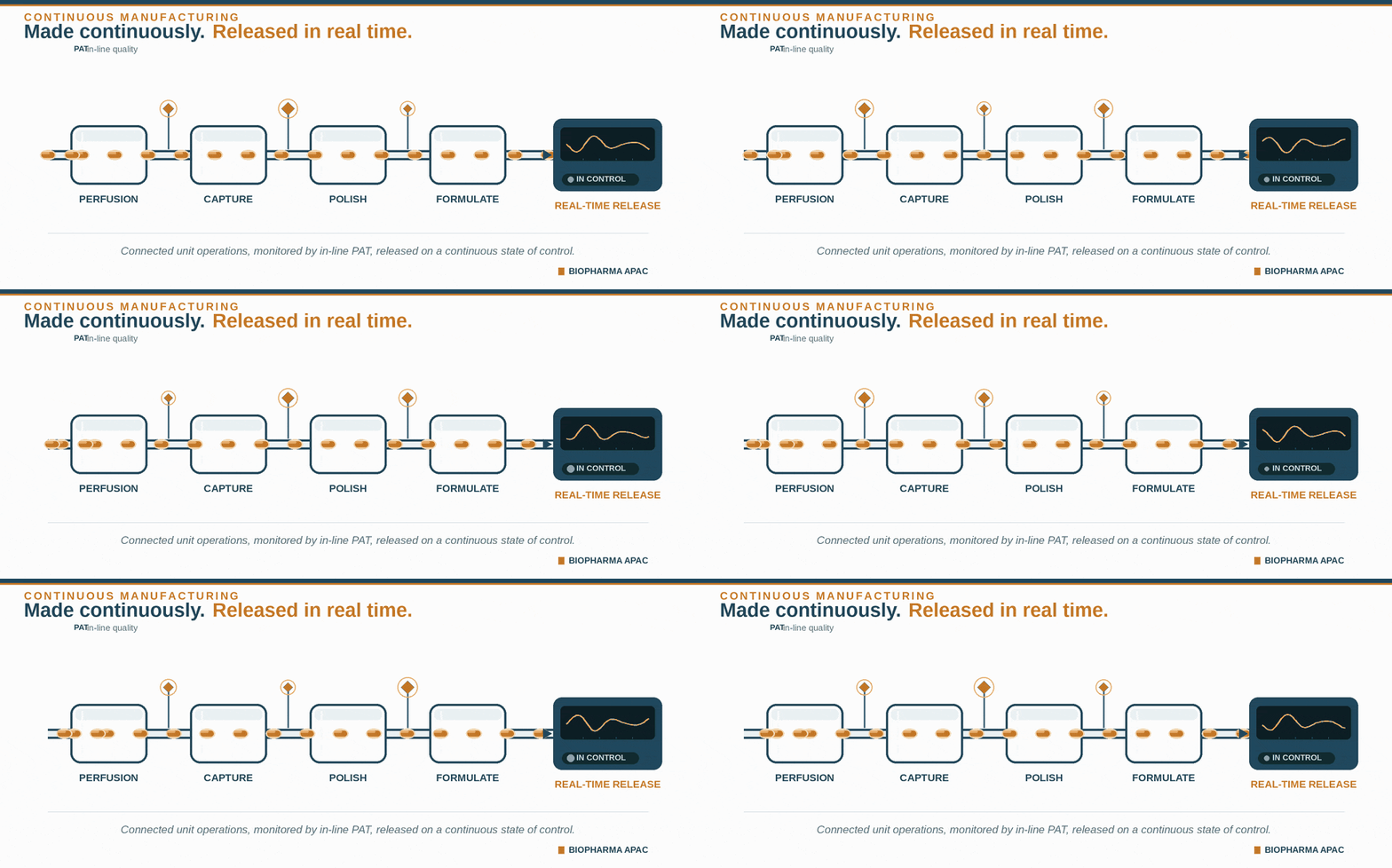
- Quality and Regulatory Resilience: A subtler but important aspect of supply chain resilience is maintaining quality and compliance during disruptions. The period saw numerous regulatory flexibilities – for example, during COVID, regulators allowed some remote inspections and expedited approval of alternate API sources for drugs in shortage. By 2025, companies incorporated these lessons by building quality redundancy: approving multiple API suppliers in their drug master files, and investing in robust quality management systems that can handle rapid scale-up or tech transfer. The use of advanced analytics in quality control (like real-time release testing, process analytical technology) means production can ramp up or switch sites with less risk of quality issues, since the processes are under tighter control and monitoring. Additionally, companies established knowledge management systems to quickly share process know-how between sites – so if one site goes offline, another can more rapidly take over production of the affected product. Regulatory agencies in the US and EU have actively encouraged such resilience measures, updating guidelines to support continuous manufacturing and risk-based approaches that enable flexibility without compromising safety.
Timeline of Disruptions and Resilience Measures (2020–2025)
To contextualise the supply chain resets, it’s helpful to look at a brief timeline of major disruptions and the corresponding resilience measures implemented by industry and governments:
|
Year |
Disruption / Challenge |
Resilience Response |
|
2020 |
COVID-19 pandemic triggers global lockdowns; API/export bans (e.g. India temporarily halts some drug exports); shortages of PPE, reagents, vial glass. |
Emergency manufacturing pivots (many companies repurpose facilities for COVID products); governments invoke Defense Production Act and fund production of critical supplies; initial stockpiling of essential medicines begins. |
|
2021 |
Vaccine supply crunch – unprecedented demand for COVID vaccines; Logistics bottlenecks (Suez Canal blockage, port delays); raw material shortages (lipids for mRNA, bioreactor bags). |
Rapid capacity scale-up via partnerships (rivals team up to manufacture vaccines); new supply chain task forces coordinate raw material allocation; diversification of suppliers for critical inputs (e.g. lipids, packaging) and investment in secondary suppliers. Shipping routes are adjusted, and air freight is used more to meet immediate needs. |
|
2022 |
War in Ukraine – causes energy price spikes & scarcity of some materials (e.g. Ukraine is a key source of neon gas for imaging equipment); China lockdowns disrupt API supply; global inflation surges; cybersecurity threats increase (some pharma firms hit by supply chain-related cyber attacks). |
Energy resilience plans activated (alternative fuel sourcing, adjusting production schedules to off-peak energy times, etc.); acceleration of nearshoring plans – US & EU announce incentives for domestic API production; companies audit and fortify their supply chain cybersecurity, segmenting networks to protect manufacturing (lessons from earlier cyber incidents like NotPetya). Inventory buffers further increased to buffer China disruptions. |
|
2023 |
Historic generic drug shortages in U.S. and Europe (e.g. cancer drugs, saline IV bags) due to manufacturing quality issues and reliance on few suppliers; global shipping costs normalize but labour shortages persist (truck driver scarcity, etc.); new pandemic scares (e.g. mpox outbreak, regional COVID waves) test vaccine distribution again. |
Greater regulatory intervention: FDA and EMA fast-track approval of new suppliers for shortage drugs; strategic API stockpiles created (U.S. establishes a reserve of key generic APIs); pharma companies implement dual sourcing for all high-risk products. Digital tracking of drug supply introduced (e.g. U.S. FDA pilots a dashboard for hospital drug shortages). Companies invest in workforce development (e.g. training more staff on supply chain operations, cross-training to cover absenteeism). |
|
2024 |
Geopolitical tensions (US–China relations) raise possibility of trade restrictions on pharmaceuticals; a major raw material plant fire (fictional scenario for this timeline) tests the industry’s resilience; continued high demand for new therapies (new Alzheimer’s drug launch strains supply of antibodies). |
Proactive contracting: companies sign agreements with multiple suppliers in different regions for key inputs (including clauses for priority supply if one region is cut off). The affected raw material shortage is mitigated by leveraging global inventory and substitute materials, thanks to earlier scenario planning. Control tower systems in big pharma prove their worth by re-routing and reallocating stock to prevent any patient impact during the plant outage. Governments in US and EU formalise “friend-shoring” alliances for pharma supply, pledging mutual support to avoid shortages. |
|
2025 |
Post-Pandemic normalisation – supply chains operating near pre-2020 norms, but with new structural resilience; some overcapacity issues emerge (certain COVID-related capacity now underutilised); emerging markets demand more local manufacturing. |
Optimization phase: companies begin refining their expanded networks for efficiency – e.g. consolidating some overshot capacity (Resilience Co. closes unused sites), while repurposing others for new needs (idle COVID vaccine lines converted to other vaccines or mRNA therapies). Global initiatives (like the Kigali Rwanda mRNA plant) come online, marking a shift to distributed manufacturing. Industry and regulators convene to codify best practices in supply chain risk management gained since 2020, ensuring the lessons remain ingrained. |
Table 2: Timeline of major disruptions (2020–2025) and how the biopharma supply chain responded and adapted.
This timeline underscores the dynamic nature of the past five years. Each challenge was met with measures that gradually built a more robust and responsive supply chain. By 2025, the industry is far better positioned to handle surprises: there is greater transparency, more backup options, smarter use of data, and a willingness to invest in preparedness. The culture has also shifted – resilience is now a board-level topic, not just an operational issue. Companies routinely discuss supply chain risks in strategic planning, and many have created dedicated roles such as “Chief Supply Chain Resilience Officer” or similar. In the next section, we will delve into specific case studies and strategic approaches, such as the use of digital twins, automation, and how different types of companies (big pharma vs biotech) have contributed to (and learned from) this resilience journey.
Technological and Strategic Innovations Driving Resilience
A striking feature of the 2020–2025 period is how rapidly technology and new strategies were embraced to bolster manufacturing and supply resilience. These innovations span digital tools, automation, and novel strategic collaborations. Below, we highlight some of the key approaches:
Digital Twins and Advanced Analytics
The concept of a digital twin – a virtual replica of a physical process or system – found powerful applications in biopharma manufacturing and supply chains. On the manufacturing side, companies built digital twins of production lines and even entire facilities, allowing them to simulate changes and stress-test processes without risking actual downtime. For example, vaccine producers used digital twins to model scaling an mRNA production line from lab scale to industrial scale, ironing out bottlenecks in silico. This significantly shortened tech transfer timelines and reduced trial-and-error during scale-up[54][55]. In one instance, a major pharma used a digital twin of a bioreactor to optimise mixing parameters and nutrient feeds for a monoclonal antibody process, resulting in higher yields and a more stable process before physical implementation.
In supply chain management, as discussed, digital twins of distribution networks enabled scenario planning for disruptions. Combined with advanced analytics, firms can run thousands of “what-if” scenarios overnight – for example, assessing the impact of a 6-month factory shutdown or a sudden 50% spike in demand – and identify the best mitigation strategies. Artificial intelligence (AI) and machine learning (ML) further enhance these capabilities: they sift through mountains of data (from equipment sensors, weather forecasts, political news, etc.) to predict where the next issue might arise. A practical outcome of analytics is improved predictive maintenance of equipment – AI models predict machine failures before they happen, allowing preemptive repairs during planned downtime, thus avoiding surprise outages that could disrupt supply. AI is also being used for demand forecasting with greater accuracy, which directly informs production planning and inventory management (mitigating the risk of stockouts or overproduction). Importantly, digital tools have broken down silos: manufacturing, quality, and supply chain teams now often work off shared data platforms, so everyone has a single source of truth and can coordinate more effectively.
One caution that emerged is cybersecurity – the more connected and digital the operations, the more vigilant companies must be about cyber threats. The industry responded by investing in robust cyber defenses, given that a cyberattack on a digitised plant or a data integrity breach could undermine resilience. Many companies implemented segmented networks and strict access controls, along with regular cybersecurity drills, to safeguard their shiny new digital infrastructure. In summary, digital twins and analytics have transitioned from buzzwords to practical tools in the pharma resilience toolkit, enabling data-driven decision-making at unprecedented speed and accuracy.
Automation and Robotics
Automation has been a growing trend in pharma for decades, but the recent challenges greatly accelerated its adoption in two areas: manufacturing processes and quality control/warehouse operations. On the production floor, automation ranges from robotic arms in fill-finish lines to fully automated cell culture systems. For instance, companies producing cell therapies introduced robotic handling for cell cultures and aseptic processing, which reduced the manual labor needed and improved consistency. The Oncomed case in Eastern Europe illustrates this – their new high-speed syringe filling line includes automatic optical inspection and operates in an isolator (minimising human intervention) This not only boosts throughput to 100+ million units a year but also ensures sterility and quality with minimal human error. In traditional pharmaceutical manufacturing (like tableting or API synthesis), continuous manufacturing technology – often highly automated – has gained ground, allowing processes to run with minimal downtime and real-time monitoring. As noted earlier, continuous manufacturing can shorten production cycles and was piloted successfully by companies like Vertex for small molecules. These continuous lines rely heavily on automation and sensors to keep the process steady and in-spec.
Automation is also revolutionising quality control. In 2025, many labs use automated sample preparation and testing equipment. For example, instead of a technician manually performing dozens of chromatography tests on a batch, a robotic system can do it faster and feed data into an AI that immediately flags anomalies. This speeds up batch release and catches issues early, contributing to resilience by preventing faulty batches from progressing and causing wider shutdowns. Warehousing and logistics have similarly seen a robotic boost: large firms implemented automated guided vehicles (AGVs) in warehouses to move materials, and robotic picking systems to manage inventory – critical for accuracy when stocking buffer inventory for resilience. During pandemic peaks when human access was limited due to distancing, these automated systems proved their value by keeping materials flowing with minimal personnel on-site.
In summary, automation and robotics amplify resilience by ensuring that processes are reliable, scalable, and less dependent on human availability. They also free up skilled human workers to focus on oversight and improvement rather than repetitive tasks, which is valuable especially when travel restrictions or health crises limit workforce capacity. Looking ahead, the trend is moving toward “lights-out” manufacturing in certain areas – highly automated facilities that could run with very few people physically present – which could be especially useful in scenarios where human access is risky or limited.
Nearshoring and Regionalisation Strategies
We have touched on nearshoring in the supply chain context, but it’s worth emphasising as a strategic shift on its own. Nearshoring in manufacturing means locating production close to the end market or company headquarters to reduce transit time and geopolitical risks. Post-2020, pharma companies re-evaluated their global manufacturing footprints. Many decided to invest in additional facilities in their key markets – for example, several European and American companies built or expanded plants in the U.S. to serve the U.S. market (even if production costs are somewhat higher there) in order to ensure supply continuity. AstraZeneca’s announced plan (pending government support) to build a vaccine and therapeutics manufacturing site in the UK, and concurrently threatening to shift it to the U.S. if support wanes, underscores how companies are actively comparing locations and will choose ones that offer both financial viability and reliability. The CHIPS and Science Act in the US and analogous EU initiatives for medicines are providing funding to lure manufacturing back.
It’s not only Western firms doing this – Indian and Chinese vaccine makers have also set up fill-finish facilities in places like the Middle East or Africa to be closer to those emerging markets and to sidestep trade barriers. Japan and Korea, while historically strong in pharma manufacturing, also invested in Southeast Asia for regional supply networks. The lesson learned is that having all eggs in one basket (one country or factory) is dangerous; instead, companies are striving for a network of regional hubs. In 2025 we see the early fruits of this: a more distributed manufacturing landscape, where, for instance, a company might have an API plant in Europe, another in India, and a formulation plant in North America, all capable of stepping up if one region faces trouble.
The concept of “manufacturing resilience hubs” has emerged: facilities designed with excess capacity and flexible production lines that can swing into action if another site goes down or if a surge arises. Governments encourage these hubs by committing procurement contracts or maintenance fees (so the facility is sustained even when idle). Such hubs often specialise by modality – e.g. one might be a vaccine hub, another a small-molecule hub – and are strategically placed (one per continent, say). This is a shift from the pre-2020 model where a single large plant might supply the whole world for a given drug. In essence, nearshoring and regional hubs trade some efficiency for a lot more security and speed. Executives now often talk about “latency” in supply – the latency (delay) of supply is reduced if you produce nearer to the demand. And in pharma, a delay can be life or death, so the value of that latency reduction is immense.
Advanced Collaboration Models (Large Pharma vs. Biotech)
A significant lesson from the COVID vaccine success was the power of collaboration across company lines – e.g. big pharma helping small biotech, competitors forming alliances. In building resilience, large pharmaceutical companies and smaller biotech firms have played different but complementary roles. Large pharma companies, with their deep pockets and extensive infrastructure, led many of the big expansions and technology deployments. They can afford to invest in, say, a fully digital integrated supply chain system or a new factory that might only pay off years later. During crises, big pharmas also acted as anchors – for example, Pfizer and Merck each lent manufacturing capacity to smaller companies or partners when needed (Merck famously helped produce Johnson & Johnson’s COVID-19 vaccine in 2021). This kind of capacity sharing was unprecedented but proved effective, and now there are frameworks for such arrangements if future emergencies arise. Large firms also often took charge in industry consortia working with governments on preparedness (e.g. mRNA vaccine capacity consortium in the EU).
On the other hand, agile biotech players showed how quickly innovation can be done, and often partnered with Contract Development and Manufacturing Organisations (CDMOs) to get manufacturing up and running. A standout example is the Moderna story: a relatively small biotech in 2020, it leveraged partnerships (with Lonza for manufacturing, with distributors, etc.) to supply millions of doses globally in record time. Many biotechs don’t build their own factories at early stages – instead, they outsource to CDMOs. By 2025, this model has only grown: outsourcing is now critical, and CDMOs are booming to accommodate it. The benefit is that even small companies can tap into world-class manufacturing without the lead time and cost of building it themselves. However, the reliance on CDMOs means that if the CDMO sector faces issues (such as overcapacity or undercapacity), the small companies are directly impacted. We saw this with cell/gene therapy biotechs around 2022–2023: many had to delay trials because CDMOs were full or because, conversely, some CDMOs (like Resilience) scaled back operations due to lower demand, affecting clients. The lesson is that partnership and agility need to be balanced with some level of control or plan B. Some biotechs, upon reaching mid-size, are now investing in their own small-scale modular plants (especially for niche products like personalised therapies), to reduce sole dependence on external manufacturers.
Large pharma vs biotech differences also appear in risk tolerance and innovation adoption: smaller biotechs, being less burdened by legacy systems, sometimes adopted novel manufacturing tech faster (for instance, a cell therapy startup might use an entirely new automated platform from day one, whereas a big company might have dozens of older processes to upgrade gradually). This helped prove new concepts that big players could then scale up. Meanwhile, big pharma’s scale allowed them to invest in multiple approaches simultaneously – e.g. pursuing both nearshoring and farshoring strategies in parallel just in case, which a small firm could never do. Together, this ecosystem of large and small, connected by CDMOs and often facilitated by public sector support, created a resilience that neither could achieve alone. It’s increasingly common to see hybrid teams – for example, a large pharma might embed some of its experts in a partner biotech’s project to accelerate tech transfer, or vice versa, a biotech might license a big company’s manufacturing technology to produce its drug. The old model of strict silos has given way to a more networked industry.
Finally, it’s worth noting the role of data sharing collaborations: The pandemic spurred the formation of cross-industry groups to share supply chain information under neutral umbrellas (sometimes via trade associations or third-party data platforms) – for example, sharing about API supply constraints or shipping lane issues. While companies remain competitors, there’s a clearer understanding that certain pre-competitive collaboration (especially on resilience and safety) benefits everyone.
Lessons Learned and Conclusion
As we reflect on the intense period leading up to and through 2025, several key lessons emerge regarding biopharma manufacturing resilience:
- Invest Ahead of Need: Perhaps the clearest lesson is the value of proactive investment in capacity and supply chain robustness. The pandemic proved that waiting until a crisis hits is too late to build capacity or secure supplies. The companies and countries that fared best were those that had some latent capacity or could quickly repurpose existing resources. By 2025, the industry has internalised this by investing in flexible capacity (like modular plants and single-use systems) that can be activated quickly for various needs. This entails a mindset shift from viewing manufacturing as a cost centre to viewing it as a strategic asset and even a competitive advantage.
- Balance Efficiency with Redundancy: The pre-2020 obsession with lean efficiency left no slack in the system. Now, there is a more balanced approach. Resilience means having redundancies – multiple suppliers, extra inventory, backup plants – which does incur cost, but the avoided losses from preventing a supply failure far outweigh those costs. The lesson is that some inefficiency is actually efficient when considering risk-adjusted outcomes. This is a hard sell to boards initially, but 2020–2021 provided a real-world business case: companies that could keep supplying (or quickly bounce back) not only avoided revenue loss but also gained reputational trust. Executives can now point to those cases to justify resilience investments.
- Leverage Technology and Data: The industry learned to embrace digital transformation under pressure, and it paid off. Tools like digital twins, AI-driven analytics, and automation proved their worth by enabling faster, smarter responses to problems. One takeaway is that digital investments should not wane in calmer times – continuous improvement of these systems is needed, and integration across the enterprise (manufacturing, supply chain, R&D) yields the best results. There’s also a talent aspect: companies realised they need people who understand both pharma and data science. Thus, training and hiring in these cross-disciplinary skills is part of the resilience strategy, ensuring that the technology is used to its full potential.
- People and Skills: While we often focus on equipment and data, a crucial lesson is that skilled personnel are irreplaceable in managing crises. During the pandemic, heroes were often supply chain managers who creatively rerouted supplies or engineers who devised makeshift production lines in record time. Companies are now investing in workforce development – cross-training staff on multiple roles, maintaining surge teams that can be deployed to troubleshoot at plants around the world, and fostering a culture of agility and problem-solving. The human factor also means caring for employees during crises (providing safe work conditions, support, etc.), since without healthy, motivated teams, even the best plans falter. In essence, resilience is as much about people as it is about machines.
- Collaboration is Key: No organization can achieve resilience alone in a globally interconnected system. The past years taught the value of public-private partnerships (e.g., Operation Warp Speed, CEPI, EU’s support for BioNTech in Africa) in sharing risk and resources to build capacity for the common good. It also highlighted industry collaborations – whether it’s big pharma manufacturing for smaller ones or competitors aligning on standardising certain data exchanges. Going forward, maintaining these collaborative networks (perhaps via formal alliances or at least open lines of communication) is vital. One concrete idea is the establishment of multilateral supply chain agreements – akin to how countries have mutual aid pacts, companies could have pre-arranged pacts to help each other with critical supplies in emergencies.
- Adaptive Strategy: Finally, the overarching lesson is that resilience is not a one-time project, but a continuous, adaptive process. Threats and demand patterns will continue to evolve (e.g., tomorrow’s crisis might be a cyberattack or a natural disaster exacerbated by climate change affecting raw material crops, or a sudden breakthrough therapy that needs billions of doses). The companies that will thrive are those that build agility into their DNA – capable of scaling up, scaling down, switching gears, and learning on the fly. The period up to 2025 has been a crash course in this, and in many ways a successful one: despite some hiccups, the biopharma industry managed to deliver billions of vaccine doses, adapt to massive demand shifts like the GLP-1 obesity drug boom, and continue supplying critical medicines worldwide. Each challenge overcame has left a residue of knowledge and improved practice.
In conclusion, as of 2025 the biopharma sector is strategically stronger and more resilient than it has ever been. Manufacturing capacity has expanded globally, with APAC, North America, and Europe all reinforcing their strengths and addressing weaknesses. Supply chains have been rewired for flexibility and transparency. The next challenge will be to maintain this momentum and not become complacent during periods of stability. Resilience efforts must also align with other priorities such as sustainability and cost-effectiveness, ensuring a balanced approach. The lessons from 2020–2025 will guide the industry’s response to future challenges – whether it’s another pandemic, a scientific revolution requiring scale-up (like mRNA was, perhaps next quantum leaps in personalised medicine), or geopolitical shifts. The core message to executives is clear: manufacturing and supply resilience is an investment in long-term success and societal trust. In the words of one industry leader, “Resilient operations are now as critical to our mission as innovative science – they are two sides of the same coin in delivering life-changing medicines to patients.” With that ethos, biopharma is poised to face the future with confidence built on the hard-won lessons of recent years.
(arcilla.fran@biopharmaapac.com)
Disclaimer:
This analysis is intended for informational and strategic discussion purposes only. The views expressed are based on publicly available information, industry trends, and informed interpretation as of 2025. It does not constitute investment advice, regulatory guidance, or commercial endorsement. Readers should independently evaluate decisions related to manufacturing, supply chain strategy, and policy implementation in consultation with qualified professionals.
Most Read
- Can APAC Biomanufacturing Decarbonise Without Pricing Itself Out?
- The Algorithm on the GMP Floor: AI Promises a Smarter Plant. Regulators Demand the Audit Trail.
- APAC's Peptide-Capacity Gamble
- After the Rush: APAC's mRNA and Vaccine Capacity Hangover
- The Biosimilar Race: Factory to the World — or Stuck in the Copycat Economy?
- The Vein-to-Vein Problem: Can APAC's Cold Chain Carry Advanced Therapies?
- Vectors, Plasmids and the CGT Trap: APAC's Cell and Gene Therapy Ambitions Face an Upstream Bottleneck
- Can APAC Build Radioligand Therapy Before the Atoms Decay?
- The Great Biopharma Reset: 50 Developments That Changed Everything in H1 2026
- Beyond the Trial: Can Real-World Evidence Earn Regulatory Trust in APAC?
- Beyond the Obvious Giant: Where APAC's Clinical Trials Go Next
- The Frontier That Won’t Quite Arrive
Bio Jobs
- Sanofi Turns The Page As Belén Garijo Steps In And Paul Hudson Steps Out
- Global Survey Reveals Nearly 40% of Employees Facing Fertility Challenges Consider Leaving Their Jobs
- BioMed X and AbbVie Begin Global Search for Bold Neuroscience Talent To Decode the Biology of Anhedonia
- Thermo Fisher Expands Bengaluru R&D Centre to Advance Antibody Innovation and Strengthen India’s Life Sciences Ecosystem
- Accord Plasma (Intas Group) Acquires Prothya Biosolutions to Expand Global Plasma Capabilities
- ACG Announces $200 Million Investment to Establish First U.S. Capsule Manufacturing Facility in Atlanta
- AstraZeneca Invests $4.5 Billion to Build Advanced Manufacturing Facility in Virginia, Expanding U.S. Medicine Production
News