The Accidental Gerotherapeutic
31 August 2026 | Monday | Analysis
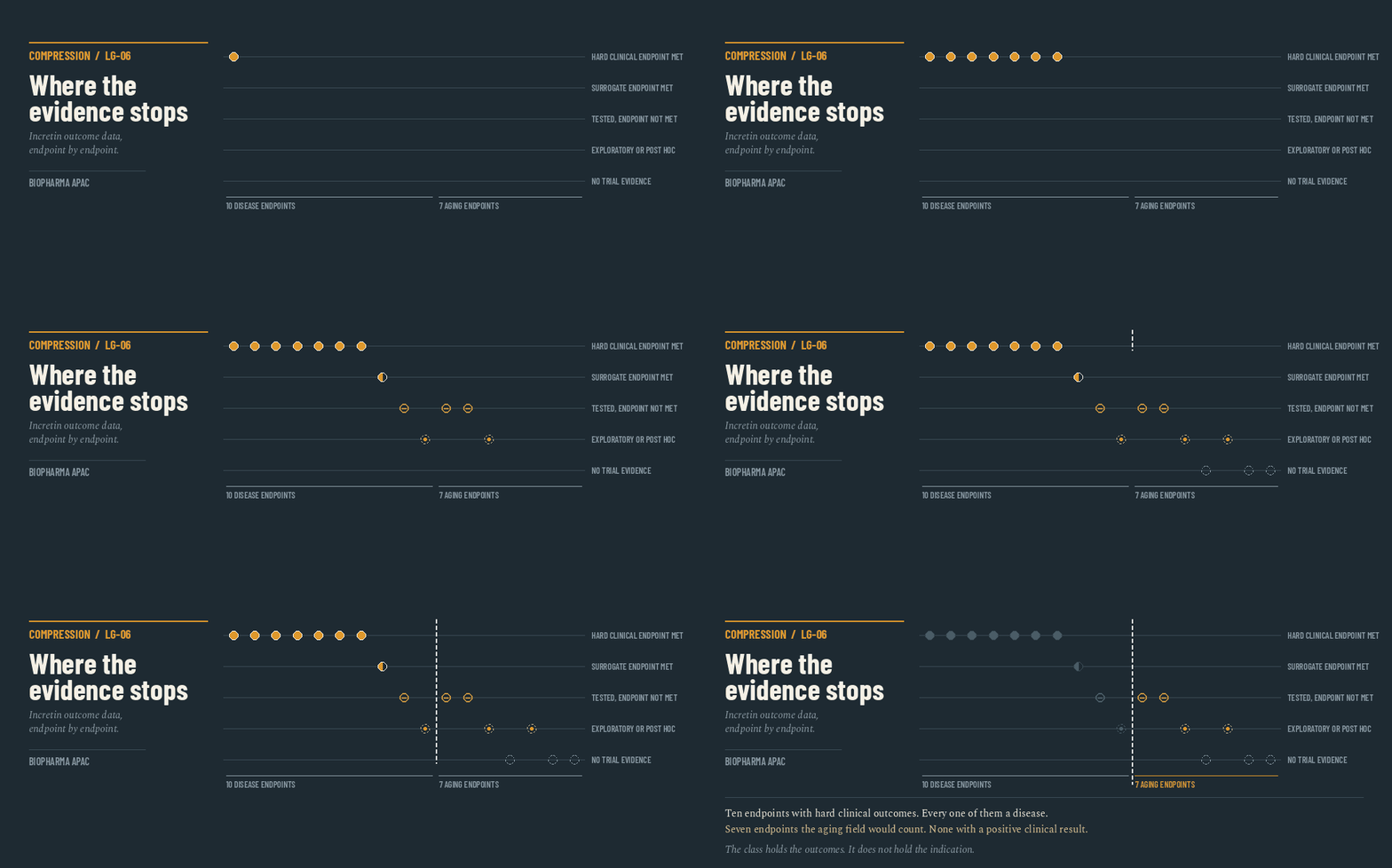
Figure 1. Endpoint coverage map: where the incretin class has outcome evidence, and where it does not. Seventeen endpoints across three bands, scored against five evidence tiers. Everything above the dashed line is an organ disease endpoint measured in a diseased population, and no enrolment criterion in any row is age.
METHOD IN BRIEF
Outcome evidence in this article is taken from published trial results and approved label language only. No efficacy or outcome claim is sourced from investor presentations, company pipeline decks, analyst notes or conference marketing material. Where a result is post hoc, exploratory, secondary or not controlled for multiplicity, that status is stated in the sentence that reports it.
Manufacturing and capacity figures are taken from company disclosure with the disclosure date attached, and are reported as company statements rather than as verified capacity. Prices are dated, sourced and stated in local currency as issued.
No off-label use is described in a way that could function as clinical guidance, and no dose, regimen, sourcing route or acquisition channel is described. Safety findings are reported from labels and regulatory communications only. Case reports, patient forums, social media discussion and clinic marketing are excluded as sources for safety claims.
This article is about the longevity implications of an existing drug class. It is not a market assessment of that class, and it is not clinical guidance of any kind.
The class that answered a question nobody asked it
For the better part of a decade the longevity field has argued about how a drug for aging would ever reach a market. Which endpoint would carry a filing. Which population would be enrolled. Which regulator would move first, and what it would have to accept in order to move at all. That argument is still running. LG-01 mapped the three routes out of it, and none of them has yet delivered an approved product anywhere in Asia-Pacific.
While the argument continued, a drug class arrived that does, on the evidence, several of the things a gerotherapeutic is expected to do. It lowers cardiovascular events in people who do not have diabetes. It slows the progression of kidney disease. It improves function in heart failure with preserved ejection fraction, in obstructive sleep apnoea, and in osteoarthritis of the knee. It reverses liver histology well enough to have carried an accelerated approval. It does at least some of this through mechanisms its own trial data cannot attribute to weight loss. It is made at industrial scale inside the region, it lost patent protection in two of Asia's largest pharmaceutical markets on the same day in March 2026, and it now sells in India for less per month than dinner for two.
Incretin therapy was not built for any of this. It was built to lower blood glucose. Everything downstream, the cardiovascular data, the renal data, the appetite biology that made it a consumer phenomenon, came later and mostly came as a surprise. The class has no aging indication anywhere in the world, has never enrolled a trial on an age-defined criterion, and has never been asked by a regulator to explain what it does to the biology of aging.
This piece is not a market report on that class. The question here is narrower. If the closest working approximation to a gerotherapeutic in this region arrived through metabolic disease, by accident, what does that do to the people trying to build the purpose-made version?
The answer, worked through below, is uncomfortable in four separate places: the evidence bar, the regulatory frame, the price, and the muscle.
What the outcome data supports
Start with the strongest single finding, because it is the one that makes the comparison worth making at all.
SELECT enrolled 17,604 adults aged 45 and over with a body mass index of 27 or higher and established cardiovascular disease but not diabetes. The headline result, a reduction in major adverse cardiovascular events, was already the largest outcome signal the class had produced in a non-diabetic population. The prespecified adiposity analysis published in The Lancet in October 2025 is what matters here. It found benefit consistent across every baseline weight and waist circumference category, no linear relationship between early weight loss and subsequent event risk, and mediation analysis attributing no more than about 33 per cent of the MACE effect to reduction in waist circumference.
Read that number the way a gerontologist would. Roughly two thirds of the cardiovascular benefit of a weight loss drug is not explained by weight. The trial's own authors concluded that the class should be reconceptualised as disease-modifying rather than as glycaemic or weight management. That is close to the language a gerotherapeutic developer uses, arrived at from the opposite direction, in a population that was never selected on age.
There is a second finding inside the same analysis that the longevity field should have flagged and largely did not. In the placebo group, weight loss was associated with a higher risk of events, with excess events concentrated among participants who lost five per cent or more of body weight, and those participants also carried disproportionately higher non-cardiovascular mortality. Unintentional weight loss as a hazard marker in older adults is standard geriatric knowledge. Seeing it surface inside a modern outcomes trial, as a placebo-arm signal running opposite to the treatment effect, is a reminder that the same number can mean two entirely different things depending on how it was produced.
Around that anchor sits a body of outcome evidence that is genuinely large for any class, and unusually large for anything the longevity field could plausibly claim as adjacent. SOUL extended the cardiovascular result to oral semaglutide in type 2 diabetes with established cardiovascular or kidney disease, at a hazard ratio of 0.88. FLOW reported a 24 per cent reduction in the primary kidney outcome and an 18 per cent reduction in cardiovascular events in type 2 diabetes with chronic kidney disease. STEP-HFpEF moved symptoms and physical function in heart failure with preserved ejection fraction and obesity, a phenotype with a median age well into the sixties and no previously effective pharmacological option. SURMOUNT-OSA carried tirzepatide into an approved sleep apnoea indication on apnoea-hypopnoea index. STEP 9 moved knee osteoarthritis pain. STRIDE moved walking distance in peripheral artery disease.
Two entries need their qualifications stated rather than buried. SURPASS-CVOT compared tirzepatide against dulaglutide rather than placebo, met non-inferiority at a hazard ratio of 0.92 and did not meet superiority at a p value of 0.09; the 16 per cent reduction in all-cause mortality in the same dataset was not controlled for multiplicity and cannot be read as an established effect. The MASH approval of August 2025 was an accelerated approval on a histological surrogate, which is an architecture point rather than a clinical one: it shows what a surrogate can carry when there is an accepted disease behind it, and how little it can carry when there is not.
Add these together and the pattern is clear. Across a set of conditions that are overwhelmingly conditions of later life, one drug class has repeatedly moved hard clinical endpoints, in adequately powered trials, in populations that regulators recognise. No compound developed explicitly as a gerotherapeutic is anywhere near that evidence base, and none is likely to be for years.
What the outcome data does not support
Now the other side, which is where the argument actually turns.
Every one of those endpoints is an organ disease endpoint measured in a diseased population. Not one is an aging endpoint. Not one enrolment criterion is age. The class has never been tested for its effect on the rate of aging, on multimorbidity onset, on disability-free survival, or on any composite the geroscience literature would accept as a healthspan measure. What it has is a long row of individually approvable indications that happen to cluster in the second half of life.
Two results make the distinction concrete rather than semantic.
The first is evoke and evoke+, published in The Lancet in 2026 after topline presentation at CTAD in December 2025. These were the largest trials of an incretin in early symptomatic Alzheimer's disease, 3,808 participants randomised across two protocols, amyloid confirmed, followed for 104 weeks with a 52 week extension. The trials moved biomarkers. Cerebrospinal fluid phosphorylated tau, neuroinflammation and neurodegeneration markers and plasma high-sensitivity CRP shifted by up to around 10 per cent in the direction the hypothesis predicted. They moved nothing clinical. The primary endpoint difference on Clinical Dementia Rating Sum of Boxes was minus 0.08 with a p value of 0.57 in evoke and 0.10 with a p value of 0.46 in evoke+, and pooled progression from mild cognitive impairment ran at a hazard ratio of 0.96.
That is the single most useful negative result available to the longevity field, and it deserves reading carefully rather than filing as a disappointment. The biomarker-led development thesis, the argument that a compound moving the right molecular markers in the right direction is thereby modifying the underlying process, was tested here at a scale geroscience has never had, with far better biomarkers than any aging clock on offer, and it did not hold. Biology moved. The patient did not.
The second is the epigenetic evidence, which is thinner than its coverage suggests. A post hoc analysis published in Nature Communications in 2026, with 84 participants, reported a pace of aging roughly nine per cent slower on DunedinPACE. Its own companion pilot, SLIM LIVER, published in npj Aging in the same year with 41 participants, reported DunedinPACE moving 0.018 in the opposite direction. Both are small, both are secondary, and they disagree. LG-05 set the line this series holds on such results and it holds here without modification: a biological age result is a laboratory output, not a clinical fact.
One cautionary entry belongs here as status rather than verdict. Exenatide-PD3, the Parkinson's disease trial, was negative, and in June 2026 The Lancet issued an Expression of Concern following an MHRA inspection. That process has not concluded and no finding should be inferred from it. It is recorded because any honest account of the class outside metabolic disease has to include it.
One more absence belongs in this section. Across the pivotal semaglutide obesity trial programme, 358 participants were aged 65 or over. That is the geriatric evidence base for the drug class that this region's older adults are now taking in very large numbers. The population the longevity field cares most about is the population these trials studied least.
The off-label reality, and what regulators have actually said
Regional use has run well ahead of regional labels, and it has done so in a way that is now shaping regulatory language the longevity field will inherit.
Japan regulates the class through Optimal Use Promotion Guidelines and reimbursement criteria that turn on body mass and organ disease: a body mass index of 35 or above, or 27 and above with two or more obesity-related comorbidities. Nothing in that architecture turns on age. Be precise about what those criteria reach, though. They govern reimbursement inside the insured system, and they do not reach the self-pay channel, which is where anything sold on an aging or wellness rationale in Japan actually sits, and which LG-02 examined in a different therapeutic context.
Korea has gone furthest, and Korea is the market that matters most for this argument.
On 8 April 2026 the Central Pharmaceutical Affairs Advisory Committee of the Ministry of Food and Drug Safety concluded, with unanimous agreement among members, that GLP-1 obesity treatments should be designated drugs of misuse and abuse concern. MFDS pre-announced the enabling amendment on 5 June, adding a new subparagraph to Article 2 of the Regulations on the Designation of Drugs of Misuse and Abuse Concern, covering liraglutide, semaglutide and tirzepatide preparations for the treatment of obesity. The comment period closed on 26 June. At the end of July the ministry indicated it had found nothing in the submissions that would change the content and intended to issue the notification as planned, although opposition from clinicians and from industry, plus a petition seeking further review, had by then slowed the final step. The notification had not been confirmed as issued at the time of writing, so anyone citing the designation as being in force should confirm the number and effective date first.
Two features of it matter far more to this field than whether it lands in August or in October.
The first is what MFDS put in its own regulatory impact analysis. Imports and supply of these products in Korea rose from roughly 169.9 billion won in 2024 to roughly 1.0709 trillion won in 2025, a 6.3-fold increase in a single year. The same analysis recorded 69 inappropriate prescriptions to children under twelve and 194 to pregnant women. The head of the ministry's drug management division told reporters in April that Korea's measured obesity rate is low while subjective self-perception of obesity runs at 54 per cent, and that this gap fed the committee's deliberation. This is a regulator describing, in its own documents, a large population taking a metabolically powerful drug for reasons the label does not cover.
The second is the scope, and it is the sharpest single fact in this article. The designation covers liraglutide, semaglutide and tirzepatide preparations indicated for obesity. It does not cover semaglutide indicated for type 2 diabetes. The same molecule, made in the same plant, acting on the same receptor, is a drug of misuse concern under one indication and an ordinary prescription medicine under another. Nothing about the pharmacology changes at that boundary. What changes is the sentence on the label.
The practical consequences are modest and the symbolic ones are not. Once designated, products must carry the misuse statement on the pack and cannot be dispensed without a physician's prescription even in the dispensing-exception areas where up to three days' supply is otherwise available without one. They join a list of 22 designated ingredients that currently includes erectile dysfunction treatments, premature ejaculation treatments and anabolic steroids. MFDS estimated the direct cost to industry at 24 million won, being two million won per item across twelve marketed products. The Korean Diabetes Association's response was that a designation without prescribing and distribution monitoring is largely symbolic, and it made the connected point that restricting misuse while leaving obesity uncovered by national health insurance had itself pushed demand into commercial and non-clinical channels.
Set aside whether the measure is well-designed. What matters here is that it is the most explicit statement any regulator in this region has made about giving a metabolically effective drug to people who are not sick, and that its operative distinction is the indication rather than the biology. That is precisely the transaction a gerotherapeutic proposes, and precisely the lever it does not have. Anyone who eventually walks into MFDS with an age-defined indication will be arguing inside a frame that has already been built, in the language of misuse, next to anabolic steroids.
Elsewhere the posture is enforcement rather than classification. Singapore's Health Sciences Authority has run 16 investigations since 2022 and removed 82 listings. Australia's Therapeutic Goods Administration issued an alert in April 2026 on imported unregistered GLP-1 products. On safety specifically, this piece takes its position from labels and regulatory communications only, which means recording that the United States FDA removed suicidal ideation labelling on 13 January 2026, and declining to characterise anything circulating in case reports or online discussion.
Who makes it, and where
The manufacturing position is the part of this story that is genuinely region-native, and the part most likely to be underestimated by anyone reading from outside Asia-Pacific.
Solid phase peptide synthesis capacity in the region has expanded at a pace with few parallels in recent manufacturing history. WuXi AppTec disclosed 32,000 litres of SPPS reactor volume on 8 January 2024, stated volume above 100,000 litres at the end of 2025, and has guided to 130,000 litres by the end of 2026. That is roughly fourfold in two years. These figures are company statements attached to their disclosure dates and are reported as such, not as independently verified capacity, and the usual caution about reactor volume as a proxy for output applies.
On the finished product side, March 2026 was the discontinuity. Semaglutide's Indian patent lapsed on 20 March and launches began on 21 March, with Sun Pharma, Dr Reddy's, Zydus, Natco, Alkem, Glenmark, Lupin, Mankind and Eris all moving inside the first week. Trade reporting counted more than forty versions within weeks, a figure that comes from secondary sources and should be treated as an order of magnitude rather than a count.
China's core compound patent expired on the same date, 20 March 2026, after the Supreme People's Court upheld its validity on 31 December 2025 and CNIPA rejected a patent term extension application in September 2025. The outcome there has been entirely different. Ten to twelve marketing applications from firms including Hangzhou Jiuyuan Gene Engineering, Livzon, Qilu, Huadong Medicine, CSPC, United Laboratories, Fosun Wanbang and Chia Tai Tianqing were queued at the National Medical Products Administration. A month after expiry none had been approved, with applicants publicly attributing the delay to suspension of review over test data protection under the China-Switzerland Free Trade Agreement, which requires at least six years of protection for undisclosed pharmaceutical test data. No approval had been publicly reported at the time of writing, five months after expiry, and Chinese trade press has speculated on first approvals as early as the third quarter of 2026.
The asymmetry is worth stating plainly. Protection in the United States, Japan and Europe runs to 2031 and 2032. Asia-Pacific is therefore the first region in the world to run a large-scale generic incretin market, and it is simultaneously the region that supplies the peptide. Whatever the next decade of this class looks like commercially, its shape is being set here, five to six years before it is set anywhere else.
The pricing floor
This is where the accident stops being an interesting observation and becomes a problem on somebody's balance sheet.
At launch on 21 March 2026, Sun Pharma stated monthly therapy costs of approximately 900 to 2,000 rupees for its weight management brand and 750 to 1,300 rupees for its diabetes brand. Other entrants clustered nearby, with trade reporting putting Alkem near 450 rupees per week and the broader generic field somewhere between roughly 1,300 and 4,200 rupees per month depending on brand, dose and device. Novo Nordisk had already cut branded prices in India ahead of expiry and cut again afterwards. Some launch-week press reported per-injection figures that do not reconcile cleanly with the company's own stated monthly ranges, so the company statement is used here and the discrepancy is left visible rather than smoothed over.
Convert the low end and the number is under ten US dollars a month, for a molecule with cardiovascular outcome data, renal outcome data and a liver approval behind it. Separately, the first oral small molecule in the space, orforglipron, discovered at Chugai and approved by the FDA on 1 April 2026, launched at 149 and 399 US dollars in its tiered pricing, which sets a very different anchor in the markets that will get it.
Now put a purpose-built gerotherapeutic next to that. It will arrive with no outcome data of comparable weight, because nobody has run those trials on an aging endpoint and nobody currently can. It will arrive with no reimbursement, because as LG-09 will argue in Wave 3, there is no payer for prevention in a well population anywhere in this region. It will arrive, in most business cases now circulating, at a self-pay monthly price somewhere between fifty and several hundred US dollars.
And it will be arriving into markets where the pharmacist can hand over a molecule with hard endpoints for the price of a coffee.
The pricing floor problem is not really a cost of goods problem. Cost of goods for a well population is LG-07's subject and it deserves its own treatment. This is a positioning problem, and positioning problems are worse, because they cannot be engineered away. The reference price for long-horizon preventive medication in Asia-Pacific has now been set by somebody else, in a category the gerotherapeutic developer does not control, on the back of trials the gerotherapeutic developer did not pay for. Every conversation with a health technology assessment body, every conversation with a self-pay clinic channel, every conversation with a consumer who has already read about incretins, now starts from that anchor.
There is a harder version of the point. A payer or an HTA committee asked to consider an aging-modifying product will reach for the nearest comparator, and the nearest comparator is now a cheap generic with better evidence. The incumbent is not a rival longevity company. It is a metabolic disease drug that got old.
The muscle question
The one place where the class looks less like a gerotherapeutic than a hazard is body composition, and this is where LG-03 becomes load-bearing rather than a cross-reference.
Incretin-driven weight loss removes lean tissue as well as fat. That is not disputed. What is disputed, and what the field cannot currently settle, is when it matters, in whom, and by what measurement. LG-03 laid out why. AWGS 2025 requires low muscle mass and low strength concurrently for a sarcopenia diagnosis, having moved physical performance out of the diagnostic criteria and into outcomes. The Global Leadership Initiative in Sarcopenia has published a conceptual definition but not yet an operational one. In a single Chinese multicentre cohort, six defensible instantiations of that conceptual definition produced sarcopenia prevalence anywhere between 3.3 and 31.9 per cent, against 8.7 per cent under AWGS 2019. That is a 9.7-fold range in the eligible population from definitional choice alone.
Which means the question of whether this class causes sarcopenia in older users in Asia-Pacific is not currently answerable, not because the studies have not been done but because the instrument that would score them is still being negotiated. Whoever writes that definition determines whether the most widely used drug class in the region has a muscle problem, and how large it is. That is a great deal of consequence resting on a consensus committee.
The commercial response so far has not been encouraging. Lilly terminated its bimagrumab study in September 2025, and the trade read at the time was that body composition alone may not carry a filing. Apitegromab's EMBRAZE Phase 2, published in Nature Medicine in 2026, reported 1.9 kilograms less lean mass loss than placebo at week 24 with 54.9 per cent lean mass retention, which is a real result on a composition endpoint and still not obviously an approvable one.
So the muscle-preservation co-therapy field, which is the single most commercially concrete opportunity the longevity industry currently has in this region, is blocked on exactly the problem LG-03 described: there is no agreed endpoint, and without one there is no filing, no reimbursement and no defensible label. The drug class created the demand. The definitional vacuum stops anyone selling into it.
And the question is already being asked in a regulatory register rather than a clinical one. Korea's impact analysis is, in substance, a document about a large population taking a metabolically powerful drug outside the boundaries of its label, and body composition in exactly that population is what nobody yet has an agreed instrument to measure. The field is being asked about muscle before it has settled how to score it.
What this leaves for a purpose-built gerotherapeutic
Three conclusions follow, and none of them is the one the field usually reaches.
The first is about the evidence bar, which has been raised without anyone voting on it. A drug class now exists in this region that produces hard clinical outcomes in aging-associated disease, at scale, cheaply. Any purpose-built gerotherapeutic will be assessed against that, formally by payers and informally by everyone else. Biomarker packages and epigenetic clock movement will not clear it. Evoke is the proof: better biomarkers than the aging field has, moved convincingly, in nearly four thousand patients, with no clinical benefit at the end of it.
The second is about the route. The class got here through disease. It never had to define aging, never had to qualify an aging biomarker, never had to persuade a regulator to accept a new indication category, and never had to find a payer for well people. It treated recognised diseases in populations that happened to be old, one approvable indication at a time, and accumulated something that looks like healthspan extension as a by-product. LG-01 called this the indication route and treated it as one option among three. On the evidence of the last three years, it is not one option among three. It is the only route in this region that has ever delivered.
The third is about honesty, and it cuts against this article's own headline. Calling incretins an accidental gerotherapeutic is a useful provocation and a poor description. The class has no aging data, no aging population, no aging endpoint and no aging label. What it has is a long list of diseases of later life that it treats well. Whether that is the same thing as modifying aging is exactly the question the field has failed to answer for a decade, and the arrival of an effective drug has not answered it. It has only made the question more expensive to get wrong.
For anyone developing into this market the practical reading is short. The comparator is set. The price is set. The regulatory language about giving effective drugs to people who are not sick is being written right now, in Seoul, and it is not being written in your favour. The one clear commercial opening, muscle preservation alongside a class the region is already taking, is waiting on a definition a consensus committee has not finished. That is the map. It is less romantic than the one the longevity field has been drawing, and it has the advantage of matching the terrain.
(arcilla.fran@biopharmaapac.com)
Most Read
- Can APAC Biomanufacturing Decarbonise Without Pricing Itself Out?
- The Algorithm on the GMP Floor: AI Promises a Smarter Plant. Regulators Demand the Audit Trail.
- APAC's Peptide-Capacity Gamble
- After the Rush: APAC's mRNA and Vaccine Capacity Hangover
- The Biosimilar Race: Factory to the World — or Stuck in the Copycat Economy?
- The Vein-to-Vein Problem: Can APAC's Cold Chain Carry Advanced Therapies?
- Vectors, Plasmids and the CGT Trap: APAC's Cell and Gene Therapy Ambitions Face an Upstream Bottleneck
- Can APAC Build Radioligand Therapy Before the Atoms Decay?
- The Great Biopharma Reset: 50 Developments That Changed Everything in H1 2026
- Beyond the Trial: Can Real-World Evidence Earn Regulatory Trust in APAC?
- Beyond the Obvious Giant: Where APAC's Clinical Trials Go Next
- The Frontier That Won’t Quite Arrive
Bio Jobs
- Sanofi Turns The Page As Belén Garijo Steps In And Paul Hudson Steps Out
- Global Survey Reveals Nearly 40% of Employees Facing Fertility Challenges Consider Leaving Their Jobs
- BioMed X and AbbVie Begin Global Search for Bold Neuroscience Talent To Decode the Biology of Anhedonia
- Thermo Fisher Expands Bengaluru R&D Centre to Advance Antibody Innovation and Strengthen India’s Life Sciences Ecosystem
- Accord Plasma (Intas Group) Acquires Prothya Biosolutions to Expand Global Plasma Capabilities
- ACG Announces $200 Million Investment to Establish First U.S. Capsule Manufacturing Facility in Atlanta
- AstraZeneca Invests $4.5 Billion to Build Advanced Manufacturing Facility in Virginia, Expanding U.S. Medicine Production
News