From Concept to Validation-Ready: How Nelipak’s Singapore Hub Aims to Accelerate APAC Healthcare Packaging to Global Scale
17 March 2026 | Tuesday | Interaction
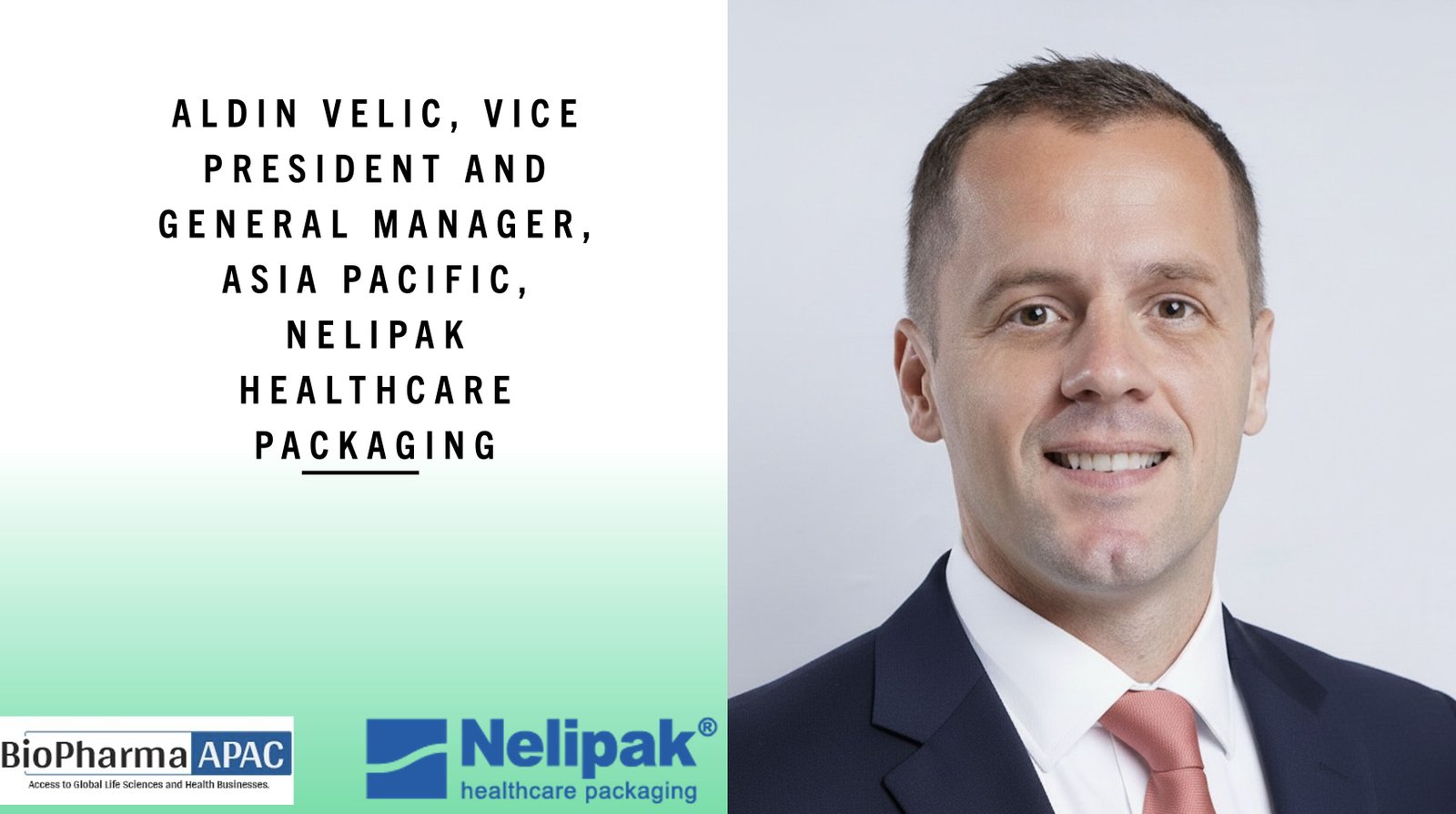
Nelipak Healthcare Packaging has launched a new Asia-Pacific Technical Development Center in Singapore, establishing an integrated hub that unites flexible and rigid sterile barrier packaging development under one roof. In this interview with BioPharma APAC, Aldin Velic, Vice President and General Manager, Asia Pacific, explains how the center is designed to take healthcare products from early concept to validation-ready packaging, while giving regional innovators a direct pathway to global manufacturing scale.
Nelipak is launching what is described as a fully integrated technical development center combining both flexible and rigid sterile barrier packaging capabilities. What strategic thinking led to the creation of this centre, and why was Singapore selected as the location for this global facility?
The launch of our Asia-Pacific Technical Development Center reflects a very deliberate step in Nelipak’s long-term global strategy. For decades, we have supported healthcare manufacturers through a network of manufacturing and innovation facilities across the Americas and Europe. As the medical device and pharmaceutical industries continue to globalize, our customers increasingly need access to the same level of technical expertise, sterile barrier system development capability, and regulatory rigor wherever they are operating.
Packaging development has historically been fragmented. Flexible and rigid sterile barrier solutions, validation, and manufacturing readiness have often been handled separately. That can slow development timelines and introduce unnecessary complexity. By bringing flexible and rigid sterile barrier packaging development together under one roof, we enable a more integrated design process – one where packaging systems are engineered holistically from the beginning rather than an afterthought.
Singapore was a natural choice for this investment. The country sits at the crossroads of Asia-Pacific’s rapidly growing biomedical ecosystem and offers exceptional global connectivity, infrastructure, and regulatory credibility. From here, we can support customers across the region while remaining tightly connected to Nelipak’s global manufacturing and innovation network.
In many ways, this center is both a regional and global capability. It allows customers developing products in Asia to access Nelipak’s full technical expertise locally, while ensuring the packaging solutions developed here can scale seamlessly into global manufacturing and commercialization.
Asia Pacific is witnessing rapid expansion in medical device innovation and manufacturing. How does Nelipak view the region’s evolving role in the global healthcare manufacturing value chain, and how will this new facility support that growth?
Asia-Pacific has become one of the most dynamic regions in the global healthcare manufacturing value chain. What we are seeing is not simply a shift in manufacturing capacity, but the emergence of the region as a center for innovation, product design, and increasingly sophisticated medical technologies.
Many global medical device and pharmaceutical companies now have major R&D, engineering, and production operations across Asia. At the same time, we are seeing an exciting wave of regional startups and emerging companies developing advanced devices, diagnostics, and drug delivery systems. These organizations need partners who can support them through the entire packaging development lifecycle – from concept and prototyping through to validation and eventual global commercialization.
Our Asia-Pacific Technical Development Center was designed precisely with this evolution in mind. It enables companies operating in the region to engage directly with Nelipak’s packaging engineers and technical specialists in real time. They can bring in a device concept and work collaboratively to design a sterile barrier system that meets regulatory requirements, protects the product, and is ready for scale-up.
More importantly, the solutions developed here are not isolated to the region. Because the center is tightly connected to our global manufacturing and innovation network, packaging designs created at our Asia-Pacific Technical Development Center in Singapore can transition smoothly into production facilities around the world. That means customers benefit from both regional responsiveness and global scalability – something that is increasingly essential in today’s healthcare supply chains.
The centre is expected to support companies at various stages of development, from early stage startups to large multinational manufacturers. Could you explain how the facility is designed to cater to such a diverse set of clients and development needs?
Healthcare innovation happens at many different scales, and one of the design principles of this center was flexibility – both in terms of the physical infrastructure and the way our teams engage with clients.
For early-stage companies and startups, the biggest hurdle is often translating a device concept into a validated sterile packaging system. They may not yet have internal packaging expertise or the infrastructure required to conduct validation testing. In these cases, the center provides hands-on technical collaboration – our engineers work directly with their teams to develop packaging concepts, select materials, produce prototype samples, and guide them through regulatory and validation requirements with a roadmap that anticipates regulatory submission requirements.
For larger multinationals, the engagement is often more about speed, precision, and scale. They may be launching a new product line, transferring manufacturing, or optimizing an existing packaging format. In those cases, we bring our full technical resources to bear — rapid prototyping, accelerated testing, and validated processes that can be transferred seamlessly to production.
What ties all of this together is the integrated nature of the facility. It is equipped to support early-stage concept development, line extensions, material transitions, and risk mitigation projects, including changes driven by sterilization modality, regulatory requirements, or supply chain resilience.
This means that pharmaceutical and medical device companies can come to us and receive a holistic and optimized sterile barrier system design, rather than having the individual components isolated and fragmented. This accelerates the product development and launch process, and is incredibly valuable regardless of company size.
Sterile barrier packaging is a critical element in ensuring product safety and regulatory compliance. How do integrated development environments like this centre help pharmaceutical and medical device companies accelerate product development while maintaining stringent quality standards?
Sterile barrier packaging plays an essential role in protecting medical devices and pharmaceutical products from the point of manufacture through transportation, storage, and ultimately clinical use. It must maintain sterility, ensure product integrity, and meet stringent regulatory standards.
When packaging development occurs late in the product lifecycle, it can lead to delays when issues are discovered during testing or validation. Integrated development environments allow us to bring packaging engineering into the process much earlier.
At our Asia-Pacific Technical Development Center, device engineers and packaging specialists can work side by side to evaluate packaging design considerations from the outset. That includes material selection, sealing technologies, sterilization compatibility, transportation durability, and regulatory compliance. By addressing these factors early, we significantly reduce the likelihood of redesigns later in the process.
The facility also enables rapid prototyping and testing. Customers can evaluate physical samples, conduct design iterations quickly, and refine packaging systems in a collaborative environment. That speeds up development timelines while maintaining the highest quality standards.
What specific capabilities and technologies will the new Singapore center provide that differentiate it from conventional packaging development facilities?
What truly differentiates this center is the level of integration it provides. Most packaging development environments specialize in either flexible sterile barrier materials or rigid packaging formats such as thermoformed trays. Our facility combines both capabilities in a single technical environment. This allows our engineers to design complete sterile barrier systems rather than focusing on individual components.
The center also includes advanced design, prototyping, and validation support capabilities. Customers can collaborate directly with Nelipak’s technical specialists to develop packaging concepts, produce prototype samples, and prepare designs that are ready for formal validation testing.
Another important element is connectivity to our global operations. The packaging systems designed in Singapore can leverage our manufacturing processes and innovation capabilities worldwide. That means the solutions we create here are designed with scalability in mind from the beginning.
In practical terms, customers can arrive with a device and a packaging challenge and leave with prototype samples and a clear roadmap toward validation and commercialization. That level of integrated technical collaboration is something that traditional packaging facilities rarely provide.
Collaboration is often a key driver of innovation in healthcare manufacturing. How does Nelipak intend to work with regional partners, research institutions and customers to foster innovation in packaging design and validation?
Our vision for the Singapore Technical Development Center is to create a collaborative environment where our customers can work collaboratively with our team to troubleshoot challenges they face. Customers can work directly with our engineers to finetune packaging concepts, evaluate material performance, and address technical challenges in real time.
We also see significant opportunities to engage with the broader biomedical ecosystem in Singapore and across Asia-Pacific. The region is home to a growing network of research institutes, engineering programs, and medtech incubators. The strategic location of the center will enable us to explore future opportunities in the region.
Another important dimension of collaboration involves regulatory and validation knowledge sharing. Packaging requirements can vary significantly across markets, and navigating those requirements effectively often requires close coordination between multiple stakeholders.
By enabling greater proximity and collaboration, we can help accelerate innovation in sterile barrier packaging while ensuring that new solutions meet the performance, safety, and regulatory standards required in global healthcare markets.
From a regulatory perspective, medical device and pharmaceutical companies face increasing scrutiny globally. How does Nelipak help its partners navigate complex regulatory requirements while designing packaging solutions suitable for global markets?
Regulatory compliance is one of the most critical aspects of healthcare packaging. Packaging systems must meet strict requirements in various markets to ensure they maintain sterility, protect product integrity, and perform reliably throughout the product’s lifecycle.
At Nelipak, regulatory considerations are embedded into our development process from the very beginning. Our technical teams are deeply familiar with global standards and other regulatory expectations governing sterile barrier systems.
The advantage of an integrated development center is that we can incorporate these requirements directly into the design process. When we collaborate with customers on packaging development, we consider not only the functionality of the product, but also validation pathways, material compatibility, and documentation requirements needed for regulatory submissions.
With manufacturing and innovation facilities across the globe, we also bring a global perspective to regulatory strategy. Packaging solutions developed in Asia Pacific can also be designed with the requirements of multiple markets in mind.
For our customers, this reduces risk and simplifies the path to commercialization. By aligning packaging design with regulatory expectations early in development, companies can avoid costly delays later in the approval process and bring their products to global markets more efficiently.
Sustainability has become an increasingly important focus for healthcare manufacturers. What innovations or initiatives is Nelipak pursuing to support more sustainable packaging solutions for pharmaceutical and medical device companies?
Sustainability is an important priority across the healthcare industry, and packaging is an area where meaningful progress can be made. At the same time, it must also meet the extremely demanding requirements for sterility, performance, and regulatory compliance, requiring careful engineering.
We approach sustainability through innovation in materials, design efficiency, and manufacturing processes. Our technical teams work with customers to explore options available to them, and we evaluate which materials work best in close partnership with our customers.
As healthcare companies increasingly set ambitious sustainability goals, we see packaging innovation as an area where technical collaboration can deliver tangible results. We aim to help customers achieve sustainability improvements while maintaining the safety, sterility, and regulatory standards that healthcare products require.
With the growth of biologics, combination products and advanced medical devices, packaging requirements are also becoming more complex. How is Nelipak preparing for these emerging trends?
The shift towards biologics, cell and gene therapies, and combination products is reshaping what sterile barrier packaging must do. These products often have highly specific environmental sensitivities — moisture, oxygen, light, temperature — and the packaging must provide precise protection across sometimes extreme distribution conditions.
Healthcare technologies are evolving rapidly, and packaging requirements are evolving with them. Products such as biologics, combination devices, and advanced diagnostic systems often have highly specialized protection and sterility requirements.
We are investing in advanced engineering and innovation capabilities, while expanding our technical development infrastructure globally. The Asia-Pacific Technical Development Center is part of that strategy.
As the complexity of healthcare products increases, the role of packaging becomes even more critical. Our goal is to ensure that packaging development evolves alongside product innovation, enabling manufacturers to bring increasingly sophisticated healthcare solutions to market safely and efficiently.
Looking ahead to 2030 and beyond, what key trends do you foresee shaping the future of healthcare packaging, particularly in the Asia Pacific region?
There are several major trends that will shape the future of healthcare packaging globally and in Asia-Pacific.
First, we will see continued growth in healthcare innovation across the region. Asia-Pacific is becoming a major center for medical technology development, and that will drive increasing demand for advanced packaging solutions that can support complex medical devices and pharmaceutical products.
Second, supply chain resilience will remain a priority. The healthcare industry is placing greater emphasis on regional capabilities that can support global production networks. The pandemic highlighted the importance of supply chain resilience, and how critical it is to ensure that access to healthcare solutions continue even amidst global headwinds. Facilities like ours help bridge regional development with global manufacturing scalability.
Finally, sustainability will continue to gain momentum as both regulators and healthcare companies seek ways to reduce environmental impact without compromising patient safety.
These trends point toward a future where packaging development becomes more integrated, more collaborative, and more globally connected. Our investment in Singapore positions Nelipak to support that future – where we will help customers across Asia-Pacific and globally bring innovative healthcare products to patients with greater speed, reliability, and confidence.
Most Read
- Can APAC Biomanufacturing Decarbonise Without Pricing Itself Out?
- The Algorithm on the GMP Floor: AI Promises a Smarter Plant. Regulators Demand the Audit Trail.
- APAC's Peptide-Capacity Gamble
- After the Rush: APAC's mRNA and Vaccine Capacity Hangover
- The Biosimilar Race: Factory to the World — or Stuck in the Copycat Economy?
- The Vein-to-Vein Problem: Can APAC's Cold Chain Carry Advanced Therapies?
- Vectors, Plasmids and the CGT Trap: APAC's Cell and Gene Therapy Ambitions Face an Upstream Bottleneck
- Can APAC Build Radioligand Therapy Before the Atoms Decay?
- The Great Biopharma Reset: 50 Developments That Changed Everything in H1 2026
- Beyond the Trial: Can Real-World Evidence Earn Regulatory Trust in APAC?
- Beyond the Obvious Giant: Where APAC's Clinical Trials Go Next
- The Frontier That Won’t Quite Arrive
Bio Jobs
- Sanofi Turns The Page As Belén Garijo Steps In And Paul Hudson Steps Out
- Global Survey Reveals Nearly 40% of Employees Facing Fertility Challenges Consider Leaving Their Jobs
- BioMed X and AbbVie Begin Global Search for Bold Neuroscience Talent To Decode the Biology of Anhedonia
- Thermo Fisher Expands Bengaluru R&D Centre to Advance Antibody Innovation and Strengthen India’s Life Sciences Ecosystem
- Accord Plasma (Intas Group) Acquires Prothya Biosolutions to Expand Global Plasma Capabilities
- ACG Announces $200 Million Investment to Establish First U.S. Capsule Manufacturing Facility in Atlanta
- AstraZeneca Invests $4.5 Billion to Build Advanced Manufacturing Facility in Virginia, Expanding U.S. Medicine Production
News