Drug Farm Secures FDA Fast Track Designation For First In Class ALPK1 Inhibitor DF 003 In ROSAH Syndrome
30 January 2026 | Friday | News
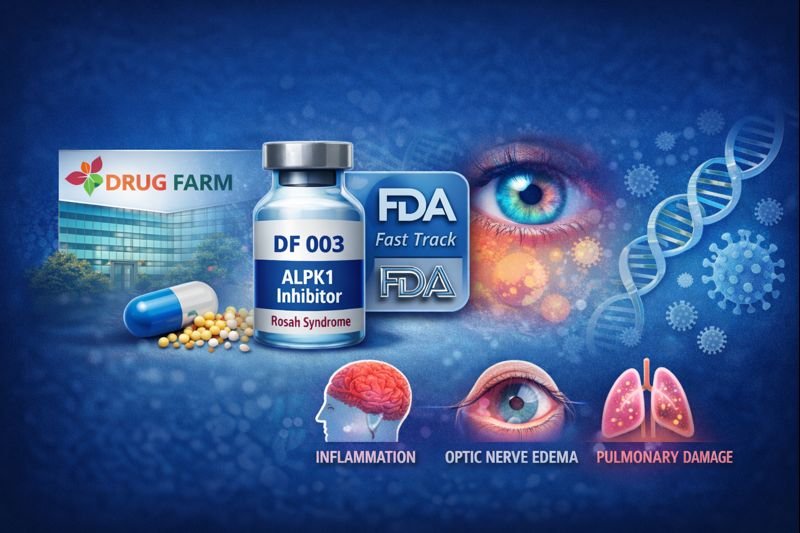
Drug Farm, a clinical-stage biopharmaceutical company advancing two novel small molecule drugs for ROSAH syndrome and hepatitis B, announced that the U.S. Food and Drug Administration (FDA) has granted Fast Track designation to DF-003, its investigational, first-in-class ALPK1 inhibitor, for the treatment of ROSAH syndrome, a rare, autosomal dominant autoinflammatory disease with no approved therapies.
Fast Track designation is designed to facilitate the development and expedite the review of drugs intended to treat serious or life-threatening conditions and address unmet medical needs. The designation enables more frequent interactions with the FDA and allows eligibility for rolling review and, if relevant criteria are met, priority review.
DF-003 is a structurally novel, orally administered small-molecule inhibitor that potently and selectively inhibits disease-causing mutant ALPK1, including the ROSAH-associated ALPK1 T237M variant. Preclinical studies demonstrated that DF-003 crosses the blood–retina and blood–brain barriers and significantly suppresses inflammatory cytokines and disease-associated phenotypes in a mouse model of ROSAH syndrome (1). These findings supported the advancement of DF-003 into clinical development.
“We have designed DF-003 to directly target the genetic root cause of ROSAH syndrome,” said Henri Lichenstein, Ph.D., Chief Executive Officer of Drug Farm. “The FDA’s Fast Track designation recognizes the serious nature of this disease and the urgent need for targeted, disease-modifying therapies, and it supports our efforts to accelerate development of DF-003 for patients.”
DF-003 is the first ALPK1 inhibitor to successfully complete a first-in-human Phase 1 study and has now entered a Phase 1b clinical trial in patients with ROSAH syndrome (NCT06395285), where it is being evaluated for safety, pharmacokinetics, pharmacodynamics and efficacy. Clinical data from the trial will be reported at meetings in 2026.
“I am encouraged by the progress of DF-003 and the FDA’s decision to grant Fast Track designation,” said Dr. John Grigg, Professor of Clinical and Experimental Ophthalmology, Save Sight Institute Faculty of Medicine and Health at The University of Sydney. “Patients with ROSAH syndrome currently have no approved treatment options, and therapies that can modify disease progression have the potential to meaningfully preserve vision and improve quality of life.”
Most Read
- Can APAC Biomanufacturing Decarbonise Without Pricing Itself Out?
- The Algorithm on the GMP Floor: AI Promises a Smarter Plant. Regulators Demand the Audit Trail.
- APAC's Peptide-Capacity Gamble
- After the Rush: APAC's mRNA and Vaccine Capacity Hangover
- The Biosimilar Race: Factory to the World — or Stuck in the Copycat Economy?
- The Vein-to-Vein Problem: Can APAC's Cold Chain Carry Advanced Therapies?
- Vectors, Plasmids and the CGT Trap: APAC's Cell and Gene Therapy Ambitions Face an Upstream Bottleneck
- Can APAC Build Radioligand Therapy Before the Atoms Decay?
- The Great Biopharma Reset: 50 Developments That Changed Everything in H1 2026
- Beyond the Trial: Can Real-World Evidence Earn Regulatory Trust in APAC?
- Beyond the Obvious Giant: Where APAC's Clinical Trials Go Next
- The Frontier That Won’t Quite Arrive
Bio Jobs
- Sanofi Turns The Page As Belén Garijo Steps In And Paul Hudson Steps Out
- Global Survey Reveals Nearly 40% of Employees Facing Fertility Challenges Consider Leaving Their Jobs
- BioMed X and AbbVie Begin Global Search for Bold Neuroscience Talent To Decode the Biology of Anhedonia
- Thermo Fisher Expands Bengaluru R&D Centre to Advance Antibody Innovation and Strengthen India’s Life Sciences Ecosystem
- Accord Plasma (Intas Group) Acquires Prothya Biosolutions to Expand Global Plasma Capabilities
- ACG Announces $200 Million Investment to Establish First U.S. Capsule Manufacturing Facility in Atlanta
- AstraZeneca Invests $4.5 Billion to Build Advanced Manufacturing Facility in Virginia, Expanding U.S. Medicine Production
News