Kazia Therapeutics Advances First In Class Nuclear PD L1 Protein Degrader With Compelling Preclinical Evidence
02 February 2026 | Monday | News
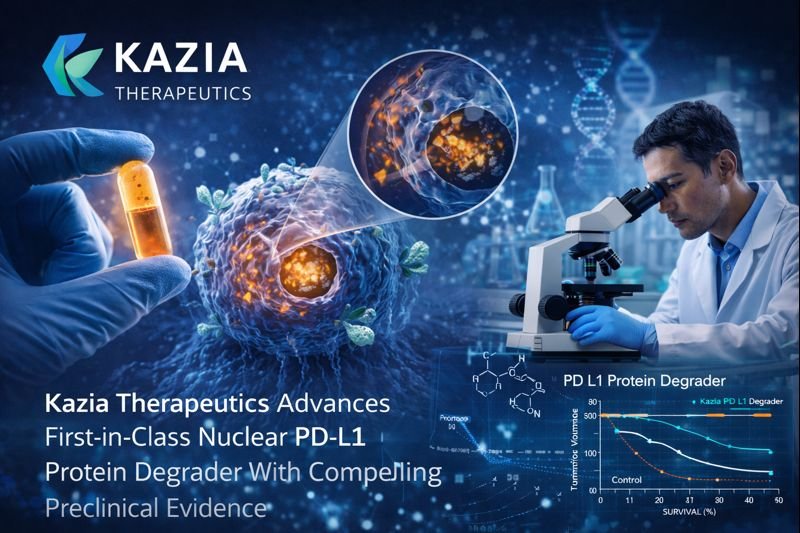
Kazia Therapeutics (NASDAQ: KZIA), an oncology-focused pharmaceutical company developing novel therapies for difficult-to-treat cancers, announced compelling preclinical and translational data supporting the development of NDL2, a potentially first-in-class protein degrader that is designed to selectively eliminate nuclear PD-L1, a previously unrecognized intracellular driver of immunotherapy resistance and metastatic progression that is not addressed by currently approved PD-1/PD-L1 antibodies. Across multiple preclinical models and patient-derived samples, NDL2 demonstrated reversal of immune exhaustion, suppression of metastatic biology, and enhanced anti-tumor activity, including in combination with anti-PD-1 therapy. By applying targeted protein degradation to one of the most clinically validated targets in oncology (PD-L1), Kazia aims to address a fundamental limitation of current immunotherapies while advancing a program aligned with growing strategic interest in protein degraders.
The data were generated by Professor Sudha Rao and her team at QIMR Berghofer and collectively support nuclear PD-L1 as a mechanistically distinct and therapeutically actionable driver of immune evasion, disease progression, and metastasis.
Key Highlights
Potentially first-in-class Nuclear PD-L1 degrader: Targets a newly discovered epigenetically regulated intracellular PD-L1 species driving immune evasion, metastasis, and resistance to checkpoint inhibitors.
Clear mechanistic differentiation: Unlike PD-1/PD-L1 antibodies that block extracellular signalling, NDL2 is designed to target nuclear PD-L1 proteins that are linked to aggressive and therapeutically resistant mesenchymal and stem-like cancer phenotypes.
In murine triple-negative breast cancer (TNBC) preclinical models, NDL2 reduced primary tumor volume by 49% as monotherapy and 73% in combination with anti-PD-1, with 50% reduction in lung metastases in the combination setting.
Favorable preclinical safety and pharmacokinetics (PK) profile: No observed toxicity, no hemolysis, preserved immune checkpoint function at the cell surface, and favorable plasma stability.
Nuclear PD-L1: A Newly Identified Driver of Resistance and Metastasis
Despite the transformative impact of immune checkpoint inhibitors, most solid tumors develop primary or acquired resistance, frequently accompanied by metastatic progression. Kazia's collaborators identified nuclear PD-L1 as a transcriptionally active regulator that promotes:
Epithelial (benign) to Mesenchymal (aggressive) Transition (EMT)
Cancer stem-like phenotypes
Metastatic dissemination
Immune exhaustion and evasion
Nuclear PD-L1 was shown to be enriched in immunotherapy-resistant tumor cells, metastatic lesions, and circulating tumor cells (CTCs), and to regulate gene programs associated with invasion, survival, and immune suppression. Importantly, this intracellular PD-L1 pool is not addressed by existing PD-1/PD-L1 antibodies, representing a previously inaccessible resistance mechanism.
Robust Translational and Liquid Biopsy Evidence
Using an advanced epigenetic digital pathology and liquid biopsy platform, researchers demonstrated that:
Nuclear PD-L1 is selectively enriched in resistant and metastatic tumors, including TNBC, melanoma, non-small cell lung cancer (NSCLC), and colorectal cancer.
Distinct nuclear versus cytoplasmic PD-L1 post-translational modification states can be reliably quantified in circulating tumor cells.
Longitudinal liquid biopsy analysis showed that reductions in nuclear PD-L1 preceded radiographic tumor responses, supporting its potential utility as an early predictive biomarker of treatment benefit.
These findings support a precision-guided development strategy, integrating therapy and diagnostics from the outset.
Immune Reprogramming and Anti-Metastatic Activity
Spatial transcriptomic and proteomic profiling revealed that NDL2 treatment was able to drive a coordinated shift toward a less aggressive tumor state and a more active anti-tumor immune response in preclinical models, including:
Suppressed aggressive mesenchymal phenotype and metastasis-associated gene programs (including VIM, ZEB1, FN1);
Reduced oncogenic PI3K/AKT and MAPK signalling;
Increased intratumoral CD8+ cytotoxic T-cell infiltration and Granzyme B expression; and
Reduced markers of T-cell exhaustion, including TIM-3 and LAG-3.
In combination with anti-PD-1 therapy, these effects translated into meaningful reductions in metastatic burden in the preclinical models evaluated, supporting the potential of NDL2 to address one of the most significant limitations of current immunotherapies.
Strategic Validation: Protein Degradation as a High-Value Oncology Modality
Targeted protein degradation has emerged as a strategically important area of innovation in oncology, with large pharmaceutical companies increasingly prioritizing degrader-based approaches to address therapeutic resistance and intracellular targets not readily accessible through conventional modalities. Importantly, recent strategic acquisitions and collaborations in this space have been predominantly focused on research-stage and preclinical programs, reinforcing the industry's willingness to invest meaningfully in degrader technologies well ahead of clinical proof-of-concept.
Against this backdrop, NDL2 uniquely combines an innovative approach with one of the most clinically validated targets in oncology. PD-L1 underpins multiple FDA-approved therapies across numerous tumor types and indications globally. By selectively degrading the nuclear, resistance-associated form of PD-L1, Kazia's approach applies a novel and differentiated mechanism to a well-established biological pathway, positioning the program favorably for future strategic partnerships and long-term value creation.
Development Pathway and Outlook
NDL2 is a bicyclic peptide-based degrader, a modality that combines the selectivity of biologics with the tissue penetration, manufacturability, and pharmacokinetic advantages of small molecules. Future development of the program is supported by scalable synthetic manufacturing, favorable stability and PK characteristics, and absence of off-target nuclear effects observed to date.
Initial clinical development is expected to prioritize immunotherapy-refractory solid tumors where PD-L1 biology, metastatic progression, and resistance to immune checkpoint inhibitors are well established. Based on the underlying mechanism and preclinical data, these may include triple-negative breast cancer and melanoma, with potential expansion into larger PD-1/PD-L1-treated populations such as lung and colorectal cancers.
Kazia and its collaborators are advancing IND-enabling studies, with the objective of initiating first-in-human clinical trials in 2027, subject to regulatory review.
Kazia also plans to present elements of this dataset at an upcoming oncology-focused scientific meeting in the second quarter of 2026, where additional details on the underlying biology, translational findings, and therapeutic rationale for nuclear PD-L1 degradation are expected to be shared. Further program updates, including expanded preclinical and translational insights, are expected to be included in the Company's next corporate presentation update scheduled for the first quarter 2026.
"The pharmaceutical industry is clearly signalling that targeted protein degradation represents a transformational opportunity in oncology," said Dr. John Friend, M.D., Chief Executive Officer of Kazia Therapeutics. "Recent high-profile acquisitions of preclinical protein degrader programs underscore the strategic value being placed on this modality. What differentiates NDL2 is that we are applying protein degradation to PD-L1 as one of the most clinically validated targets in cancer, while addressing a resistance mechanism not reached by existing therapies. Unlike programs focused on narrow biology, PD-L1 protein degraders offers multiple shots on goal across tumor types and treatment settings, which we believe creates a broad strategic partnering opportunity."
Most Read
- Can APAC Biomanufacturing Decarbonise Without Pricing Itself Out?
- The Algorithm on the GMP Floor: AI Promises a Smarter Plant. Regulators Demand the Audit Trail.
- APAC's Peptide-Capacity Gamble
- After the Rush: APAC's mRNA and Vaccine Capacity Hangover
- The Biosimilar Race: Factory to the World — or Stuck in the Copycat Economy?
- The Vein-to-Vein Problem: Can APAC's Cold Chain Carry Advanced Therapies?
- Vectors, Plasmids and the CGT Trap: APAC's Cell and Gene Therapy Ambitions Face an Upstream Bottleneck
- Can APAC Build Radioligand Therapy Before the Atoms Decay?
- The Great Biopharma Reset: 50 Developments That Changed Everything in H1 2026
- Beyond the Trial: Can Real-World Evidence Earn Regulatory Trust in APAC?
- Beyond the Obvious Giant: Where APAC's Clinical Trials Go Next
- The Frontier That Won’t Quite Arrive
Bio Jobs
- Sanofi Turns The Page As Belén Garijo Steps In And Paul Hudson Steps Out
- Global Survey Reveals Nearly 40% of Employees Facing Fertility Challenges Consider Leaving Their Jobs
- BioMed X and AbbVie Begin Global Search for Bold Neuroscience Talent To Decode the Biology of Anhedonia
- Thermo Fisher Expands Bengaluru R&D Centre to Advance Antibody Innovation and Strengthen India’s Life Sciences Ecosystem
- Accord Plasma (Intas Group) Acquires Prothya Biosolutions to Expand Global Plasma Capabilities
- ACG Announces $200 Million Investment to Establish First U.S. Capsule Manufacturing Facility in Atlanta
- AstraZeneca Invests $4.5 Billion to Build Advanced Manufacturing Facility in Virginia, Expanding U.S. Medicine Production
News