Thermo Fisher Launches EMPAD G2 Detector to Advance High-Speed 4D STEM Imaging
28 August 2026 | Friday | News
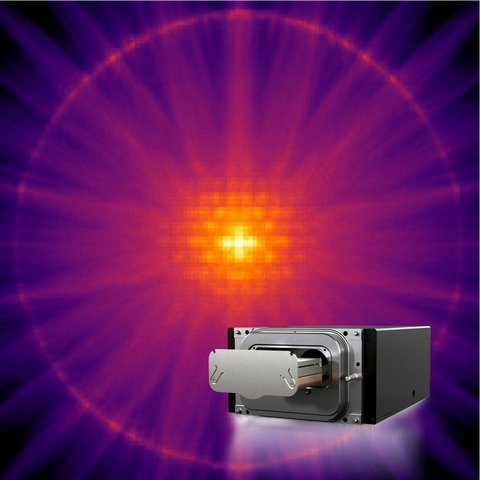
Thermo Fisher Scientific Inc., the world leader in serving science, introduced the Thermo Scientific™ EMPAD™ G2 detector, a new detector designed to help researchers see and understand materials in unprecedented detail.
EMPAD G2 enables high-speed four-dimensional scanning transmission electron microscopy (4D STEM), an advanced form of electron microscopy that captures far more information about a material than a standard image, helping researchers better understand its structure and properties.
“The EMPAD G2 gives scientists a deeper view of materials and the information they need to explore what those materials can do,” said Glyn Davies, president, materials and structural analysis, Thermo Fisher Scientific. “By making advanced 4D STEM faster, more reliable and easier to use, we can help researchers accelerate discoveries in areas such as semiconductors, energy and advanced materials — and ultimately enable new technologies that can improve our everyday lives.”
Capturing weaker signals alongside stronger ones can help researchers measure characteristics, including a material’s structure, chemistry, strain and electric and magnetic properties in a single experiment. EMPAD G2 supports advanced applications, ranging from strain mapping and differential phase contrast (DPC) to multi-slice electron ptychography for three-dimensional characterization at the atomic scale.
As 4D STEM becomes more widely used in academic and industrial research, detector performance is increasingly important. Researchers need to capture large amounts of information quickly while accurately measuring signals that can range from extremely strong to extremely weak. EMPAD G2 is designed specifically to meet these demands and help researchers get reliable quantitative information from a single acquisition.
According to David Muller, Ph.D., Samuel B. Eckert Professor of Engineering at the School of Applied and Engineering Physics at Cornell University, this new technology represents an important milestone for scanning transmission electron microscopy. “The EMPAD G2 project gave us a unique opportunity to design a detector specifically optimized for STEM, rather than TEM or x-ray imaging,” said Muller.
EMPAD G2 is also fully integrated with the user-friendly Thermo Scientific Velox software. Researchers can collect and analyze multiple types of data, including simultaneous 4D STEM and energy-dispersive x-ray spectroscopy (EDS) within a single workflow. This integration helps simplify advanced materials analysis and supports more reliable, repeatable results.
Most Read
- Can APAC Biomanufacturing Decarbonise Without Pricing Itself Out?
- The Algorithm on the GMP Floor: AI Promises a Smarter Plant. Regulators Demand the Audit Trail.
- APAC's Peptide-Capacity Gamble
- After the Rush: APAC's mRNA and Vaccine Capacity Hangover
- The Biosimilar Race: Factory to the World — or Stuck in the Copycat Economy?
- The Vein-to-Vein Problem: Can APAC's Cold Chain Carry Advanced Therapies?
- Vectors, Plasmids and the CGT Trap: APAC's Cell and Gene Therapy Ambitions Face an Upstream Bottleneck
- Can APAC Build Radioligand Therapy Before the Atoms Decay?
- The Great Biopharma Reset: 50 Developments That Changed Everything in H1 2026
- Beyond the Trial: Can Real-World Evidence Earn Regulatory Trust in APAC?
- Beyond the Obvious Giant: Where APAC's Clinical Trials Go Next
- The Frontier That Won’t Quite Arrive
Bio Jobs
- Sanofi Turns The Page As Belén Garijo Steps In And Paul Hudson Steps Out
- Global Survey Reveals Nearly 40% of Employees Facing Fertility Challenges Consider Leaving Their Jobs
- BioMed X and AbbVie Begin Global Search for Bold Neuroscience Talent To Decode the Biology of Anhedonia
- Thermo Fisher Expands Bengaluru R&D Centre to Advance Antibody Innovation and Strengthen India’s Life Sciences Ecosystem
- Accord Plasma (Intas Group) Acquires Prothya Biosolutions to Expand Global Plasma Capabilities
- ACG Announces $200 Million Investment to Establish First U.S. Capsule Manufacturing Facility in Atlanta
- AstraZeneca Invests $4.5 Billion to Build Advanced Manufacturing Facility in Virginia, Expanding U.S. Medicine Production
News