Malaysia Positions Biotechnology as a Bridge Between Asian Innovation and Global Markets
20 July 2026 | Monday | News
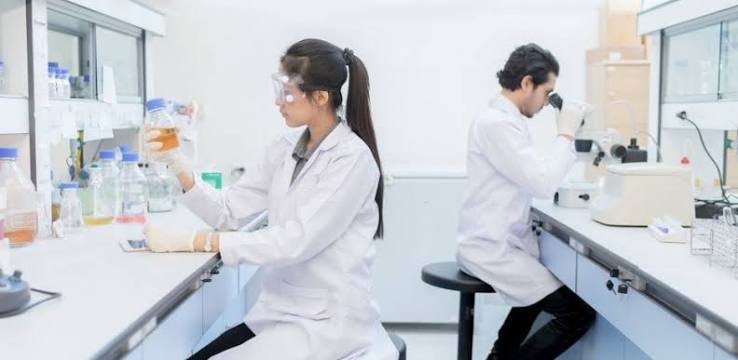
As Asia’s biotechnology sector moves from scientific capability towards commercial scale, Malaysia is positioning itself as an increasingly important connector between innovation, investment and global market opportunities.
The discussions reflected a broader shift taking place across Asian biotechnology. Scientific discovery alone is no longer enough. The ability to commercialise technology, secure strategic investment, establish international partnerships and navigate new markets is becoming equally decisive in determining which innovations achieve meaningful scale.
That ambition took centre stage at the Malaysia Session, “Unlocking Biotechnology Growth: Innovation, Investment and Global Partnership Opportunities,” held on 16 July at BIO Asia–Taiwan 2026. Organised by the Malaysian Bioeconomy Development Corporation (Bioeconomy Corporation), the session brought together companies spanning precision diagnostics, biological research and bioindustrial development to examine how scientific innovation can be translated into scalable businesses.
Building an Ecosystem Around Commercialisation
Opening the session, Bioeconomy Corporation presented “Malaysia's Bioeconomy Ecosystem: Enabling Innovation, Investment and Global Partnerships,” highlighting the importance of creating an environment in which biotechnology companies can progress from research and development towards commercialisation and international expansion.
An MoU exchange ceremony during the programme further underscored the emphasis on partnership as a mechanism for translating ecosystem ambitions into tangible collaboration.
Malaysia's opportunity lies in the breadth of its bioeconomy. From healthcare and precision medicine to agriculture, biodiversity and sustainable industrial biotechnology, the country has the potential to build businesses around both scientific capabilities and its distinctive biological resources.
The challenge — and opportunity — is to connect those capabilities with capital, technology partners and international markets.
Precision Diagnostics Moves Towards Scale
The commercial journey from scientific discovery to market adoption was brought into focus by Assoc. Prof. Dr. Lim Su Wen, Founder and Group CEO of Oncode Scientific Sdn Bhd, who addressed the development of scalable precision diagnostic solutions for oncology.
Her presentation, “From Scientific Innovation to Market-Ready Precision Diagnostics: Building Scalable Solutions for Oncology,” highlighted one of the most consequential areas of healthcare innovation today.
As oncology becomes increasingly personalised, diagnostic technologies are assuming a more central role in identifying disease characteristics and supporting more informed treatment strategies. Yet translating sophisticated science into solutions that can be deployed broadly requires more than technological performance.
Scalability, accessibility, clinical relevance and commercial readiness must increasingly be designed into innovation from the beginning.
The discussion demonstrated how Malaysia's emerging biotechnology companies are seeking to bridge this gap between scientific capability and real-world healthcare application.
Seeing More Biology From a Single Slide
The next frontier of biological insight was explored by Jessie Phua Eng Sea, Technical and Sales Lead at MYmAb Biologics Sdn Bhd, in the presentation “One Slide. Many Tissues. Greater Insights.”
The session highlighted the growing demand for technologies capable of extracting richer biological information while improving the efficiency of research and analysis.
Across drug discovery, translational research and precision medicine, the ability to generate deeper insights from biological samples is becoming increasingly valuable. Technologies that enable researchers to examine complex tissue environments more effectively could contribute to better understanding of disease biology and support the development of more targeted therapeutic strategies.
The presentation also reflected a wider evolution in biotechnology: innovation is increasingly taking place at the intersection of biology, data and advanced analytical capabilities.
Turning Borneo's Biodiversity Into a Bioindustrial Opportunity
Malaysia's biotechnology opportunity extends well beyond healthcare.
Hazwan Razak, Chief Executive Officer of BioVerde Technologies Sdn Bhd, brought a distinctly bioindustrial perspective with his presentation, “From Rainforest to Global Markets: Building Borneo's Bioindustrial Future through Partnership.”
Borneo's extraordinary biodiversity represents a potentially valuable foundation for new biotechnology applications, but converting natural resources and scientific knowledge into sustainable commercial industries requires carefully structured partnerships.
Research capabilities must connect with technology, manufacturing, investment and global distribution networks. At the same time, commercial development must be built around responsible and sustainable utilisation of biological resources.
The discussion positioned partnership not simply as a route to international expansion, but as an essential component of building a competitive bioindustrial ecosystem capable of moving innovations from local discovery to global markets.
Cross-Border Collaboration Becomes a Growth Strategy
The session concluded with a panel discussion on “Building Cross-Border Innovation: Connecting Global Partnerships in Biotechnology and Healthcare,” moderated by Bioeconomy Corporation and featuring Lim Su Wen, Jessie Phua Eng Sea and Hazwan Razak.
A common message emerged across the discussions: the next phase of biotechnology growth in Asia will increasingly depend on the strength of the connections between national ecosystems.
Companies may develop technologies locally, but commercialisation is increasingly global. Access to specialised research capabilities, clinical networks, manufacturing infrastructure, investment and markets frequently requires partnerships that cross national borders.
For Malaysia, this creates an opportunity to position its biotechnology ecosystem as both a destination for international collaboration and a launchpad for home-grown companies seeking global scale.
Taiwan, with its established biotechnology, healthcare and technology capabilities, represents one potential partner within this expanding regional network. Similar opportunities are emerging across Japan, South Korea, Singapore and the wider Asia-Pacific region.
From National Ecosystems to an Asian Biotechnology Network
The Malaysia Session ultimately pointed towards a larger transformation underway across the region.
Asia's biotechnology opportunity may not be defined by a single dominant ecosystem. Instead, its competitive strength could emerge from increasingly interconnected centres of expertise — with scientific innovation developed in one market, technology partnerships established in another, manufacturing undertaken elsewhere and commercial opportunities pursued globally.
Malaysia's combination of healthcare innovation, biological diversity, emerging biotechnology enterprises and ecosystem development capabilities gives it a distinctive position within this evolving landscape.
The question for the region is therefore shifting from where biotechnology innovation will emerge to how quickly Asian ecosystems can connect their respective strengths.
If those connections can be built effectively, Malaysia's biotechnology ambitions could extend far beyond building successful domestic companies. The country could become an important bridge linking scientific innovation, biological resources and commercial opportunities across Asia and the global bioeconomy.
Most Read
- Can APAC Biomanufacturing Decarbonise Without Pricing Itself Out?
- The Algorithm on the GMP Floor: AI Promises a Smarter Plant. Regulators Demand the Audit Trail.
- APAC's Peptide-Capacity Gamble
- After the Rush: APAC's mRNA and Vaccine Capacity Hangover
- The Biosimilar Race: Factory to the World — or Stuck in the Copycat Economy?
- The Vein-to-Vein Problem: Can APAC's Cold Chain Carry Advanced Therapies?
- Vectors, Plasmids and the CGT Trap: APAC's Cell and Gene Therapy Ambitions Face an Upstream Bottleneck
- Can APAC Build Radioligand Therapy Before the Atoms Decay?
- The Great Biopharma Reset: 50 Developments That Changed Everything in H1 2026
- Beyond the Trial: Can Real-World Evidence Earn Regulatory Trust in APAC?
- Beyond the Obvious Giant: Where APAC's Clinical Trials Go Next
- The Frontier That Won’t Quite Arrive
Bio Jobs
- Sanofi Turns The Page As Belén Garijo Steps In And Paul Hudson Steps Out
- Global Survey Reveals Nearly 40% of Employees Facing Fertility Challenges Consider Leaving Their Jobs
- BioMed X and AbbVie Begin Global Search for Bold Neuroscience Talent To Decode the Biology of Anhedonia
- Thermo Fisher Expands Bengaluru R&D Centre to Advance Antibody Innovation and Strengthen India’s Life Sciences Ecosystem
- Accord Plasma (Intas Group) Acquires Prothya Biosolutions to Expand Global Plasma Capabilities
- ACG Announces $200 Million Investment to Establish First U.S. Capsule Manufacturing Facility in Atlanta
- AstraZeneca Invests $4.5 Billion to Build Advanced Manufacturing Facility in Virginia, Expanding U.S. Medicine Production
News