From Market Access to Long-Term Growth: Rethinking Biopharma Expansion in APAC
04 August 2026 | Tuesday | Interaction
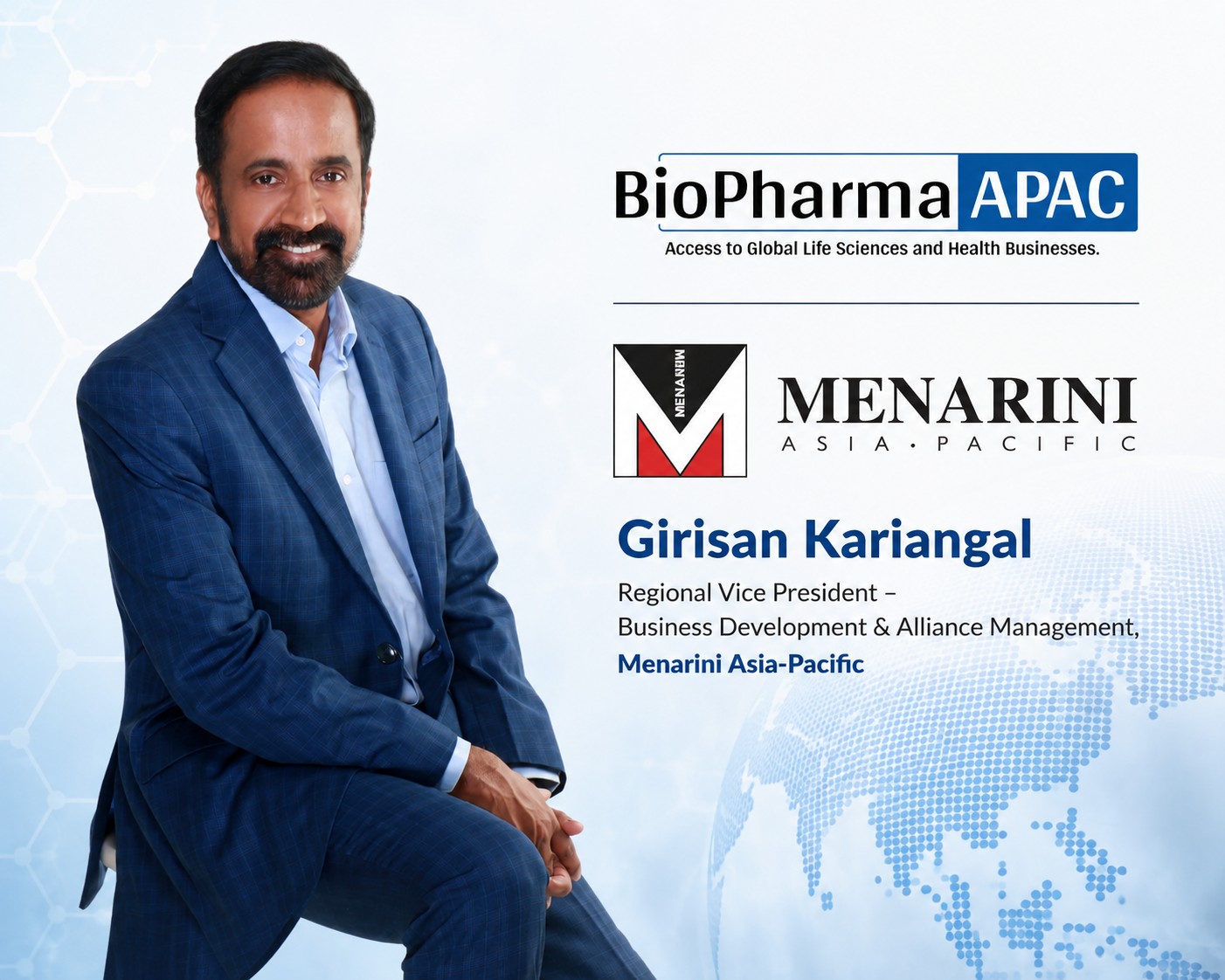
BioPharma APAC speaks with Girisan Kariangal, Regional Vice President – Business Development & Alliance Management, Menarini Asia-Pacific, on the evolving opportunities and challenges of expanding across Asia-Pacific. He shares insights into navigating diverse healthcare systems, building strategic regional partnerships, and developing sustainable commercial strategies that improve patient access while driving long-term growth across the region.
Asia-Pacific is often spoken of as a single growth market, yet each country presents unique regulatory, reimbursement, and commercial realities. What are the biggest misconceptions global biopharma companies still have when entering the region?
Having spent more than three decades building businesses and strategic partnerships in Asia-Pacific, one lesson has remained remarkably consistent: there is no single playbook for success across the region. Each market has its own healthcare system, decision-making processes and priorities, which need to be reflected in how companies approach market entry and growth.
Global biopharma companies are increasingly sophisticated in how they approach Asia-Pacific. However, one challenge that is often underestimated is translating a local or regional strategy into approaches that work at the market level. Market size, launch timelines and commercial potential are important considerations, but long-term success also depends on understanding how healthcare decisions are made locally.
The path to patient access can vary considerably across the region. In some markets, regulatory approval may be the first of several important milestones. Reimbursement, local evidence generation, physician education and engagement with key stakeholders can all influence how effectively a therapy is adopted.
We've seen this firsthand in China through our work on herpes zoster. Working alongside leading medical societies, we developed treatment pathways that reflected local clinical practice by integrating Western medicine and Traditional Chinese Medicine. By aligning with established clinical practice and supporting physician education, the initiative helped strengthen adoption across more than 600 hospitals. It reinforced that success comes from adapting to the realities of each market, rather than assuming the same approach can be applied across the region.
Menarini has evolved beyond a traditional distribution-led model. What strategic factors drove this transformation, and what measurable advantages has it delivered for both Menarini and its partners?
The pharmaceutical industry has evolved significantly over the past decade. As innovation accelerates and healthcare systems become more sophisticated, partners increasingly expect commercial organisations to contribute far beyond product distribution. Today, they are looking for partners that can support the full product lifecycle, from regulatory strategy and market access to medical engagement, evidence generation and commercial execution.
Recognising this shift, Menarini has strengthened capabilities across medical, regulatory, market access, digital and commercial functions to support an increasingly innovative portfolio across Asia-Pacific. Our model combines regional scale with local expertise: an integrated regional platform provides strategic oversight, shared capabilities and governance, while empowered local teams tailor execution to their healthcare systems, stakeholder landscapes and market realities.
This operating model has become a key differentiator for Menarini. Today, we support more than 50 licensing partners and manage over 250 brands across 13 Asia-Pacific markets, demonstrating our ability to combine regional scale with locally informed strategies.
For our partners, this means working with a single organisation that can provide integrated support from regulatory strategy through to commercial execution, while navigating the complexities of individual healthcare systems across Asia-Pacific. For Menarini, it has enabled us to scale our regional platform while remaining responsive to local market needs, creating a model that benefits both our partners and, ultimately, the patients they serve.
As licensing and strategic alliances become increasingly important, what qualities distinguish a successful long-term regional partnership from a purely transactional commercial agreement?
The difference lies in how success is defined. A transactional relationship is often centred on delivering a specific agreement. A strategic partnership takes a longer-term view, with both organisations aligned around improving access to innovative treatments, supporting sustainable growth and creating enduring value beyond the initial deal.
That requires more than complementary commercial capabilities. It depends on shared ambitions, transparency and the ability to adapt as therapies progress through different stages of their lifecycle and healthcare environments continue to evolve. In my experience, trust is not established during negotiations. It is earned through consistent execution over time.
We've seen this across our long-standing partnerships. Over time, some have expanded beyond their original agreement, whether into additional therapies, indications or markets. That reflects the confidence partners place in our ability to deliver consistently and grow alongside them.
Our partnership with Pharmacosmos is one such example. We initially partnered to commercialise Monofer® in Australia in 2023 before expanding into Singapore Malaysia and Hong Kong in 2024, united by a shared objective of broadening patient access to innovative iron deficiency treatments. As the partnership evolved, we developed a deep understanding of each other's operating models and established a strong track record together. In 2025, that collaboration was recognised when our Australia team received Pharmacosmos' Golden Viking Award as its best-performing partner market globally.
This success laid the foundation for Pharmacosmos to appoint Menarini Asia-Pacific as its exclusive partner to register, commercialise and distribute Cosela® (trilaciclib) across multiple Asia-Pacific markets. For me, that is one of the clearest indicators of a successful strategic partnership. It demonstrates how sustained execution can transform a single licensing agreement into broader collaboration across therapies, markets and therapeutic areas.
Several APAC markets are accelerating regulatory reforms while simultaneously tightening healthcare budgets. How should pharmaceutical companies balance speed-to-market with sustainable patient access and commercial viability?
Bringing innovative medicines to patients remains a complex journey. While regulatory approval remains a critical milestone, it is no longer enough on its own to determine commercial success. It is increasingly dependent on how early companies align market access, evidence generation and commercial planning alongside the regulatory process.
Equally important is market prioritisation. Not every market needs to be entered simultaneously, and speed should never come at the expense of long-term sustainability. The strongest companies identify where clinical need, regulatory readiness and reimbursement potential are best aligned, establish a strong foundation in those markets and then build momentum across the region.
Ultimately, success should not be measured by how quickly a therapy reaches the market, but by how effectively it reaches patients. Companies that view market entry as the beginning of a long-term access strategy, rather than the end of a regulatory process, will be best positioned for sustainable growth across Asia-Pacific.
Looking ahead over the next five years, which therapeutic areas and Asia-Pacific markets do you believe will offer the strongest opportunities for global innovators, and what trends will shape partnership strategies across the region?
One of the most significant shifts over the next five years will be where innovation comes from. Asia-Pacific is no longer viewed simply as a destination for innovation. Increasingly, it is also becoming a source of innovation, with biopharma companies across the region developing high-quality assets that are attracting growing global licensing interest. That evolution is creating new opportunities for both regional and international collaboration.
From a therapeutic perspective, cardiovascular disease will remain one of the most important areas for innovation and investment. It is the leading cause of death across the WHO South-East Asia and Western Pacific regions, accounting for an estimated 9.85 million deaths annually. As populations age and the burden of chronic disease continues to rise, there will be an increasing need for innovative therapies that not only treat cardiovascular disease, but also address the complex complications and long-term management challenges associated with it.
I also see continued opportunities in differentiated therapies that address clearly defined patient populations and significant unmet medical needs. The opportunity for innovative assets is no longer just identifying what is promising, but helping them realise their full potential across multiple Asia-Pacific markets.
This is our ambition as a partner. Increasingly, companies are selecting partners based not simply on geographic footprint, but on their ability to navigate complex regulatory pathways, generate local evidence, support market access and commercialise innovative therapies across diverse healthcare systems. As innovation becomes more globally distributed, execution will become an even more important differentiator.
If you could offer one piece of advice to biotechnology and pharmaceutical companies planning their APAC expansion today, what would it be, and what common mistakes should they avoid?
One lesson I've learnt over the years is that the decisions made at the beginning of an Asia-Pacific expansion often shape opportunities well beyond the first commercialisation. My advice would therefore be to plan for the portfolio you hope to build, not just the therapy you are preparing to launch. The companies that are most successful in the region combine a clear strategic ambition with the flexibility to adapt as markets, healthcare systems and business priorities evolve.
Achieving that requires making the right strategic decisions from the outset, long before a product reaches the market. That is where involving regional partners early becomes particularly valuable. Their value lies in helping shape the strategy before execution begins. They can help test assumptions, shape decisions around market prioritisation, evidence generation, market access and stakeholder engagement, and ensure the strategy is grounded in how healthcare decisions are made across different markets.
Equally important is choosing a partner whose operating model and strategic approach can grow alongside your portfolio. Asia-Pacific is constantly evolving, and strategies need to evolve with it. A partner that can support expansion into new markets, indications and therapeutic areas will be far better placed to help companies realise the full potential of their innovation.
Most Read
- Can APAC Biomanufacturing Decarbonise Without Pricing Itself Out?
- The Algorithm on the GMP Floor: AI Promises a Smarter Plant. Regulators Demand the Audit Trail.
- APAC's Peptide-Capacity Gamble
- After the Rush: APAC's mRNA and Vaccine Capacity Hangover
- The Biosimilar Race: Factory to the World — or Stuck in the Copycat Economy?
- The Vein-to-Vein Problem: Can APAC's Cold Chain Carry Advanced Therapies?
- Vectors, Plasmids and the CGT Trap: APAC's Cell and Gene Therapy Ambitions Face an Upstream Bottleneck
- Can APAC Build Radioligand Therapy Before the Atoms Decay?
- The Great Biopharma Reset: 50 Developments That Changed Everything in H1 2026
- Beyond the Trial: Can Real-World Evidence Earn Regulatory Trust in APAC?
- Beyond the Obvious Giant: Where APAC's Clinical Trials Go Next
- The Frontier That Won’t Quite Arrive
Bio Jobs
- Sanofi Turns The Page As Belén Garijo Steps In And Paul Hudson Steps Out
- Global Survey Reveals Nearly 40% of Employees Facing Fertility Challenges Consider Leaving Their Jobs
- BioMed X and AbbVie Begin Global Search for Bold Neuroscience Talent To Decode the Biology of Anhedonia
- Thermo Fisher Expands Bengaluru R&D Centre to Advance Antibody Innovation and Strengthen India’s Life Sciences Ecosystem
- Accord Plasma (Intas Group) Acquires Prothya Biosolutions to Expand Global Plasma Capabilities
- ACG Announces $200 Million Investment to Establish First U.S. Capsule Manufacturing Facility in Atlanta
- AstraZeneca Invests $4.5 Billion to Build Advanced Manufacturing Facility in Virginia, Expanding U.S. Medicine Production
News