Daiichi Sankyo, AstraZeneca’s Enhertu Wins EU Panel Backing for Early Breast Cancer
21 September 2026 | Monday | News
- Recommendation based on DESTINY-Breast05 phase 3 trial results that showed Enhertu reduced the risk of invasive disease recurrence or death by 53% versus T-DM1
- Daiichi Sankyo and AstraZeneca’s Enhertu has the potential to become a new standard of care in this early breast cancer setting
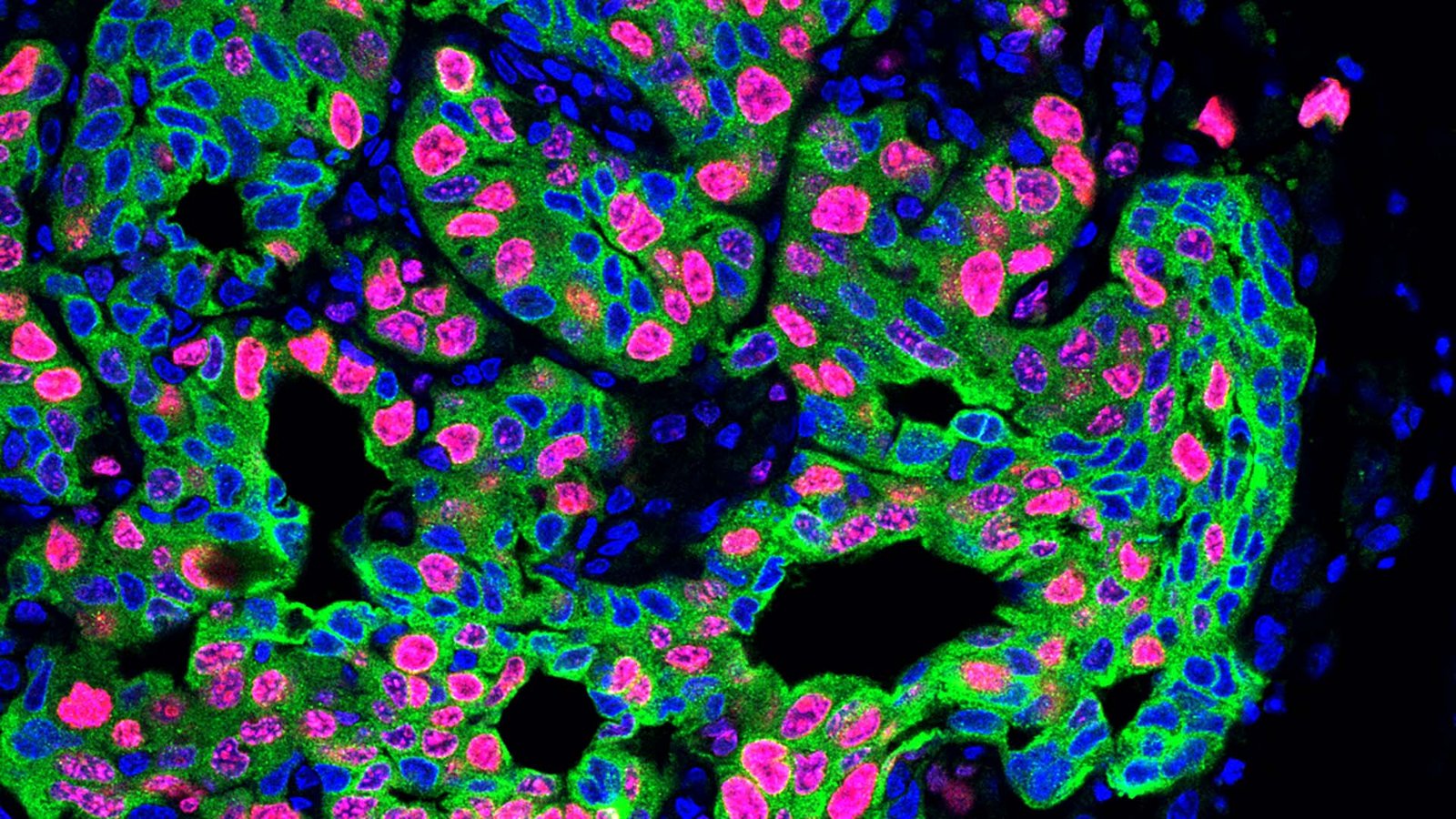
Enhertu® (trastuzumab deruxtecan) has been recommended for approval in the European Union (EU) as a monotherapy for the adjuvant treatment of adult patients with resected HER2 positive breast cancer who have residual invasive disease after neoadjuvant taxane-based and HER2 targeted treatment.
Enhertu is a specifically engineered HER2 directed DXd antibody drug conjugate (ADC) discovered by Daiichi Sankyo (TSE: 4568) and being jointly developed and commercialized by Daiichi Sankyo and AstraZeneca (LSE/STO/NYSE: AZN).
The Committee for Medicinal Products for Human Use (CHMP) of the European Medicines Agency (EMA) based its positive opinion on results from the DESTINY-Breast05 phase 3 trial presented at the 2025 European Society for Medical Oncology (#ESMO25) Congress and subsequently published in The New England Journal of Medicine. The recommendation will now be reviewed by the European Commission, which has the authority to grant marketing authorizations for medicines in the EU.
In DESTINY-Breast05, Enhertu significantly reduced the risk of invasive disease recurrence or death (invasive disease-free survival [IDFS]) by 53% (hazard ratio [HR]=0.47; 95% confidence interval [CI]: 0.34-0.66; p<0.0001) compared to trastuzumab emtansine (T-DM1) in patients with HER2 positive breast cancer with residual invasive disease following neoadjuvant therapy. Enhertu demonstrated a three-year IDFS rate of 92.4% (95% CI: 89.7-94.4) and 83.7% with T-DM1 (95% CI: 80.2-86.7). Data also showed that Enhertu significantly reduced the risk of disease recurrence or death (disease-free survival [DFS]) by 53% (HR=0.47; 95% CI: 0.34-0.66; p<0.0001) compared to T-DM1. Results showed a three-year DFS rate of 92.3% (95% CI: 89.5-94.3) in the Enhertu arm and 83.5% with T-DM1 (95% CI: 79.9-86.4).
“Patients with HER2 positive early breast cancer who have residual disease after neoadjuvant treatment experience a substantially higher risk of recurrence, making effective adjuvant treatment especially important,” said John Tsai, MD, Global Head, R&D, Daiichi Sankyo. “This positive CHMP opinion underscores the potential role of Enhertu in the curative-intent setting where it is critical to maximize the potential for sustained long-term outcomes.”
“This positive CHMP opinion marks a significant step towards bringing Enhertu into early-stage HER2 positive breast cancer in the EU,” said Susan Galbraith, MBBChir, PhD, Executive Vice President, Oncology Hematology R&D, AstraZeneca. “Enhertu cut the risk of disease recurrence by more than half compared to adjuvant standard of care for patients with residual disease, and if approved could redefine post-surgery care in the EU, keeping patients disease-free for longer and increasing the potential for cure.”
The safety profile of Enhertu in DESTINY-Breast05 was consistent with the known profile with no new safety concerns identified. The most common treatment-related adverse events that occurred in patients treated with Enhertu were nausea (71.3%), constipation (32.0%), decreased neutrophil count (31.6%) and vomiting (31.0%). Interstitial lung disease (ILD) or pneumonitis occurred in 9.6% of patients treated with Enhertu as determined by an independent adjudication committee. The majority of ILD or pneumonitis events were low grade (grade 1 [n=16; 2.0%] or grade 2 [n=52; 6.5%]). There were two grade 5 events (0.2%) of ILD or pneumonitis in the Enhertu arm.
Enhertu is approved in Brazil, Canada, India and the U.S. for the adjuvant treatment of adult patients with HER2 positive breast cancer and residual invasive disease following neoadjuvant treatment based on DESTINY-Breast05.
Most Read
- Can APAC Biomanufacturing Decarbonise Without Pricing Itself Out?
- The Algorithm on the GMP Floor: AI Promises a Smarter Plant. Regulators Demand the Audit Trail.
- APAC's Peptide-Capacity Gamble
- After the Rush: APAC's mRNA and Vaccine Capacity Hangover
- The Biosimilar Race: Factory to the World — or Stuck in the Copycat Economy?
- The Vein-to-Vein Problem: Can APAC's Cold Chain Carry Advanced Therapies?
- Vectors, Plasmids and the CGT Trap: APAC's Cell and Gene Therapy Ambitions Face an Upstream Bottleneck
- Can APAC Build Radioligand Therapy Before the Atoms Decay?
- The Great Biopharma Reset: 50 Developments That Changed Everything in H1 2026
- Beyond the Trial: Can Real-World Evidence Earn Regulatory Trust in APAC?
- Beyond the Obvious Giant: Where APAC's Clinical Trials Go Next
- The Frontier That Won’t Quite Arrive
Bio Jobs
- Sanofi Turns The Page As Belén Garijo Steps In And Paul Hudson Steps Out
- Global Survey Reveals Nearly 40% of Employees Facing Fertility Challenges Consider Leaving Their Jobs
- BioMed X and AbbVie Begin Global Search for Bold Neuroscience Talent To Decode the Biology of Anhedonia
- Thermo Fisher Expands Bengaluru R&D Centre to Advance Antibody Innovation and Strengthen India’s Life Sciences Ecosystem
- Accord Plasma (Intas Group) Acquires Prothya Biosolutions to Expand Global Plasma Capabilities
- ACG Announces $200 Million Investment to Establish First U.S. Capsule Manufacturing Facility in Atlanta
- AstraZeneca Invests $4.5 Billion to Build Advanced Manufacturing Facility in Virginia, Expanding U.S. Medicine Production
News