Japan Looks Beyond Its Borders to Build the Next Generation of Biotech Innovation
20 July 2026 | Monday | News
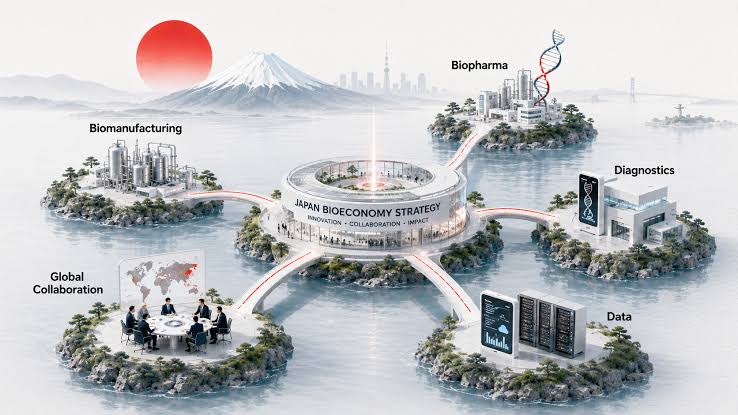
Image Source : Public Domain
Japan’s biotechnology sector is entering a new phase in which scientific strength alone may no longer determine success. As drug development becomes more complex, capital intensive and globally interconnected, Japanese companies are increasingly looking beyond traditional organisational and national boundaries to accelerate innovation.
This shift was at the centre of the Japan Session, “Meet Japanese Innovative Companies,” held on July 17 at BIO Asia–Taiwan 2026 in Taipei. Co-organised by the Japan Bioindustry Association, Taiwan’s Biotechnology and Pharmaceutical Industries Promotion Office and the Taiwan Bio Industry Organization, the session brought together companies spanning drug discovery, regulatory strategy, translational research and biomanufacturing.
Opening the session, Tetsuya Tanaka, Managing Director and CEO of the Japan Bioindustry Association, positioned collaboration as an increasingly important pillar of Japan’s biotechnology ecosystem. The country has long maintained significant capabilities across pharmaceuticals, biotechnology and healthcare, but the growing complexity of bringing new therapies from laboratory to market is making external partnerships increasingly critical.
Japan’s Bioeconomy Strategy and its wider focus on strategic growth sectors, including drug discovery and advanced medicine, reflect this changing environment. Building stronger connections between academia, industry, government and international partners is becoming essential to translating scientific capabilities into globally competitive products.
Dr Michael Huang, Director of Taiwan’s Biotechnology and Pharmaceutical Industries Promotion Office, reinforced the importance of deeper engagement between the Japanese and Taiwanese biotechnology communities. With complementary capabilities across research, clinical development, manufacturing and commercialisation, the two ecosystems have considerable scope to create new cross-border innovation pathways.
Open Innovation Becomes a Strategic Imperative
Representing Daiichi Sankyo, Masatoshi Nagamochi, PhD, from the company’s Open Innovation Group, presented the company’s approach to partnering for innovation.
His presentation highlighted a broader transformation taking place across global pharmaceutical R&D. Breakthrough innovation increasingly emerges from interconnected networks involving biotechnology companies, universities, research institutions and technology specialists rather than exclusively from within the laboratories of large pharmaceutical companies.
For established pharmaceutical players, the ability to identify promising external science and build effective partnerships around it is therefore becoming as strategically important as internal research capabilities.
The message was clear: the next generation of medicines will increasingly be built through ecosystems rather than organisations working in isolation.
Tackling Japan’s Drug Lag and Drug Loss Challenge
The pathway from global innovation to patient access was examined by Takeshi Kurosawa of CMIC, who focused on Japan’s evolving regulatory environment and the challenges associated with “drug lag” and “drug loss”.
As innovative medicines are developed through increasingly global clinical programmes, regulatory strategy has become a critical consideration for companies seeking to enter Japan. Differences in development pathways, regulatory requirements and market-entry planning can influence whether new therapies reach Japanese patients—and how quickly.
CMIC’s perspective highlighted the need to integrate Japan into global development strategies earlier rather than treating the market as a later-stage addition.
Regulatory reform can create opportunities, but companies must combine those reforms with strong clinical execution and locally informed market-entry strategies if they are to translate global innovation into meaningful patient access.
Humanised Models Bring Drug Discovery Closer to Human Biology
Dr Taichi Yamamoto, Board Member of In-Vivo Science, turned the discussion towards one of the persistent challenges in preclinical development: reproducing the complexity of the human immune system.
Humanised mouse models are becoming increasingly valuable as researchers seek more predictive ways to evaluate drug candidates before entering clinical development. By more closely replicating aspects of human immune biology in vivo, these models can help researchers investigate therapeutic mechanisms and generate evidence that may better inform clinical decision-making.
The presentation demonstrated how advances in translational research platforms are becoming an important part of the broader effort to reduce uncertainty in drug development.
As the industry confronts high development costs and significant clinical attrition, technologies capable of improving the quality of early-stage decisions could become increasingly valuable to pharmaceutical and biotechnology companies worldwide.
Global Manufacturing Partnerships Can Help De-Risk Scale-Up
The final company presentation shifted attention from discovery to manufacturing.
Toshihiro “Toshi” Ogawa, President of KBI Biopharma Japan, introduced KBI Japan and discussed how access to an international CDMO network can help biotechnology companies manage the risks associated with biomanufacturing.
For emerging biotech companies, manufacturing strategy is no longer something that can wait until a product approaches commercialisation. Process development, scalability, technology transfer and regulatory readiness increasingly need to be considered much earlier in the development journey.
By connecting Japanese innovators with broader global manufacturing capabilities, international CDMO partnerships can provide access to specialised expertise and infrastructure while helping companies prepare their programmes for future clinical and commercial scale.
Japan–Taiwan Collaboration Moves from Opportunity to Necessity
The concluding panel discussion brought together representatives from government and industry to explore how Japan and Taiwan can strengthen collaboration across the biotechnology value chain.
The session revealed a common theme running through each presentation: innovation is becoming increasingly distributed, while successful commercialisation depends on the ability to connect specialised capabilities across borders.
Japan brings deep pharmaceutical expertise, sophisticated research capabilities and an established industrial base. Taiwan, meanwhile, offers a rapidly expanding biotechnology ecosystem supported by strengths in technology, healthcare innovation, advanced manufacturing and an increasingly international outlook.
Connecting these capabilities could create opportunities extending from early-stage research and licensing to clinical development, regulatory strategy and biomanufacturing.
The significance of the Japan Session therefore went beyond introducing four companies. It reflected a wider strategic transition taking place across the life sciences industry.
The era in which a single organisation could discover, develop, manufacture and commercialise a medicine largely within its own walls is rapidly disappearing. The emerging model is one of interconnected innovation ecosystems—and Japan is signalling that international collaboration will be an increasingly important part of its biotechnology future.
For Taiwan and the wider Asia-Pacific region, that creates an opportunity not simply to partner with Japanese companies, but to become part of the networks through which Japan’s next generation of biotechnology innovation is developed and brought to the world.
Most Read
- Can APAC Biomanufacturing Decarbonise Without Pricing Itself Out?
- The Algorithm on the GMP Floor: AI Promises a Smarter Plant. Regulators Demand the Audit Trail.
- APAC's Peptide-Capacity Gamble
- After the Rush: APAC's mRNA and Vaccine Capacity Hangover
- The Biosimilar Race: Factory to the World — or Stuck in the Copycat Economy?
- The Vein-to-Vein Problem: Can APAC's Cold Chain Carry Advanced Therapies?
- Vectors, Plasmids and the CGT Trap: APAC's Cell and Gene Therapy Ambitions Face an Upstream Bottleneck
- Can APAC Build Radioligand Therapy Before the Atoms Decay?
- The Great Biopharma Reset: 50 Developments That Changed Everything in H1 2026
- Beyond the Trial: Can Real-World Evidence Earn Regulatory Trust in APAC?
- Beyond the Obvious Giant: Where APAC's Clinical Trials Go Next
- The Frontier That Won’t Quite Arrive
Bio Jobs
- Sanofi Turns The Page As Belén Garijo Steps In And Paul Hudson Steps Out
- Global Survey Reveals Nearly 40% of Employees Facing Fertility Challenges Consider Leaving Their Jobs
- BioMed X and AbbVie Begin Global Search for Bold Neuroscience Talent To Decode the Biology of Anhedonia
- Thermo Fisher Expands Bengaluru R&D Centre to Advance Antibody Innovation and Strengthen India’s Life Sciences Ecosystem
- Accord Plasma (Intas Group) Acquires Prothya Biosolutions to Expand Global Plasma Capabilities
- ACG Announces $200 Million Investment to Establish First U.S. Capsule Manufacturing Facility in Atlanta
- AstraZeneca Invests $4.5 Billion to Build Advanced Manufacturing Facility in Virginia, Expanding U.S. Medicine Production
News